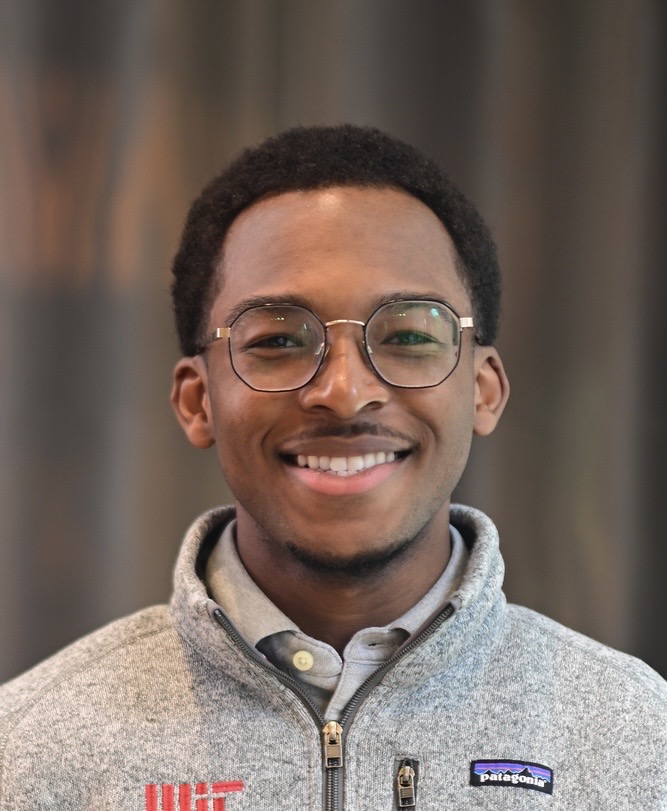
Ugo Okwuadigbo
Biology major
Chemical-Biological Engineering major
Science, Technology & Society minor
What’ve you enjoyed most about your area of study? Was there a particular discovery, new skill or way of thinking, or insight that you found especially valuable? Please share an example from your favorite class or experience.
MIT’s Program in Science, Technology, and Society taught me to see science and engineering as human systems, with human components and human considerations. That shift in perspective fundamentally changed how I approach problems and ideate solutions. As a whole, STS helped me cultivate the habits of looking for the people in the data and being inquisitive of norms in society; for example, in STS.050: History of MIT, we traced how institutions grow cultures that channel ideas and define success, looking into how MIT itself has situated itself as a place of innovation.
How does the knowledge from this field, or your interest in it, combine with your other major or minor studies at MIT?
My majors, Biology & Chemical-Biological Engineering, trained me to model systems, think technically, and navigate unknown territories. STS has given me the skills to more intentionally build those systems and consider how they might impact the world. Because of this, I believe STS to be a necessary complement to all forms of scientific study.
An MIT education includes study in the scientific, technical, social science, arts, and humanities fields. How do you think that wide range of knowledge and perspectives will be valuable to you – for your career success and for your enjoyment of life?
The most valuable part of my MIT education has been gaining the mindset that anything is possible. That, in combination with the mass of information we learn, has given me the confidence to walk into any room feeling capable and well-prepared.
What are your plans for the future?
I plan to continue learning and building where research, medicine, and design come together. To develop tools that help people make sense of their health while studying how those tools impact people.