MIT School of Humanities, Arts and Social Sciences - Great Ideas Change the World

Welcome!

Spotlights

MIT Concourse
School within a School

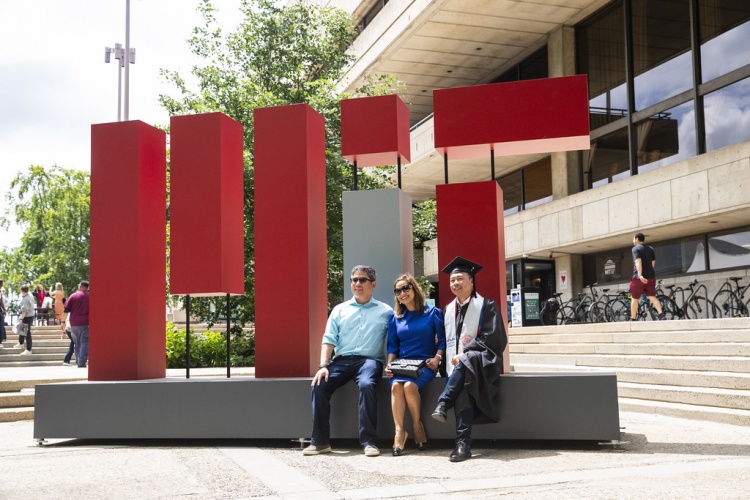
In MIT'S Concourse program, freshmen explore the sciences, humanities, and social sciences in a small, close-knit community (with a kitchen!). Professor of History Anne McCants, one of MIT's finest teachers, is the new director. Says Jean Xin '14, a brain and cognitive science major: "Concourse offered me the opportunity to explore the broader significance of the technical knowledge I am learning at MIT."

Profile + Photographs
 

Literature
Frampton wins the Rome Prize

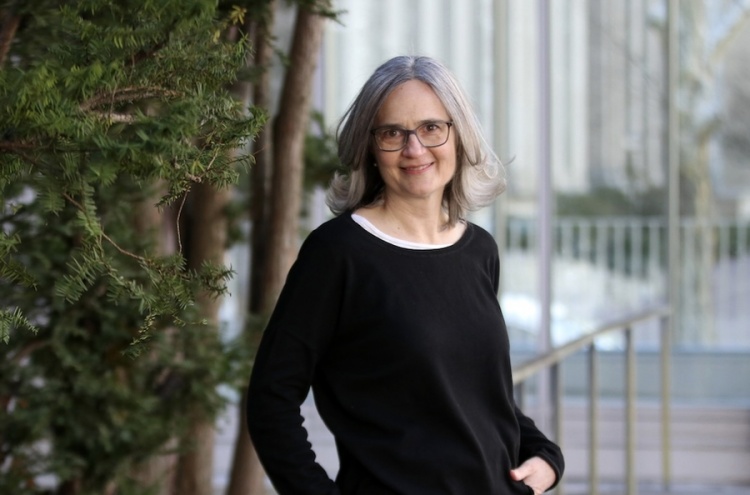
Assistant Professor of Literature Stephanie Ann Frampton has been awarded the prestigious Rome Prize for ancient studies by the American Academy in Rome. The award will provide funding for Frampton to spend 11 months living and working at the academy, a leading American overseas center for independent studies and advanced research in the fine arts and humanities. (Image: detail, Rome Prize 2013 poster) 

More


MIT Music Online 
The Listening Room 

The finest music composed and performed by MIT’s Music faculty and student-musicians is now available in The Listening Room—an online collection that showcases the Institute’s remarkable passion for music. The new site launches with 64 recordings in four musical categories—Classical, Jazz, World, and Faculty Opus.  Image: MIT President L. Rafael Reif

The Listening Room 
Video at MIT News

Linguistics + Biology
A new theory on the deep roots of human speech    

MIT researchers say the balance of evidence suggests human language is a grafting of two communication forms found elsewhere in the animal kingdom: the elaborate songs of birds, and information-bearing expression seen in various other animals. “It’s this adventitious combination that triggered human language,” says Shigeru Miyagawa, MIT Professor of Linguistics, and co-author of a paper in the journal Frontiers in Psychology.  

Full story

Political Science
The science of politics    

A common piece of received wisdom about the Cold War is that the spread of Western culture helped bring down the Berlin Wall. It is an appealing hypothesis. But is it true? Several years ago, political scientist Jens Hainmueller figured out a way to test it.

More

Monthly Digest 
Said and Done 
 

Research, News, and Kudos
Published by the Office of the Dean
MIT School of Humanities, Arts, 
and Social Sciences

May 2013 Edition

Anthropology
The Exit Zero Project 

“If you really want to understand why there is this expanding class inequality in the United States, one of the places you have to look is the long-term impact of deindustrialization. We have to think historically about how we got into this position and how we can come out of it.”  — Christine Walley, MIT Associate Professor of Anthropology

Full Story at MIT News

Image: aerial view, Wisconsin Steel, mid-1960s; Southeast Chicago Historical Museum

Anthropology
The Life of Cheese

The Life of Cheese, Crafting Food and Value in America, by Heather Paxson, MIT Associate Professor of Anthropology, is a study of American artisanal cheese and the people who make it. In her story of how craftwork has become a new source of cultural and economic value for producers and consumers, Paxson helps rethink the politics of food, land, and labor. Photocredit: Dominick Reutuer

The Life of Cheese 

Video
 | About


Economics
The Townsend Thai Project

For 20 years, MIT economist Robert Townsend has explored the links between household finances and economic growth in rural Thailand. His new book, Chronicles from the Field, based on one of the most extensive datasets in the developing world, provides a template for policies that can help alleviate poverty. 

Full Story

Philosophy 
What is "natural" and what is "social"? 

"The supposed line between the 'natural' and the 'social' is of crucial importance for theories of justice: the 'natural' is not as fixed as we might think, and the 'social' can be much more fixed than we imagined. Some differences between us must be respected, and others should be overcome—but which are which?"

Q&A with MIT Philosopher Sally Haslanger

MIT Communications Forum
Forecaster Nate Silver 

In a wide-ranging, two-hour conversation with Seth Mnookin, co-director of MIT’s Graduate Program in Science Writing, the celebrated forecaster Nate Silver offered a critique of media, advice to students, and hints about his future projects.

Video of the event

Full story at MIT News


History of Science 
Why the universe is lumpy 

"Back in January, the Edge posted almost 200 short essays in response to the question, "What is your favorite deep, elegant, or beautiful explanation?" Right away I knew what my favorite candidate would be: the prevailing explanation for why the universe is lumpy. "

— from "Elegant Wiggles: Why the Universe is Lumpy," by David Kaiser, MIT historian and physicist


Full essay in The Huffington Post


Political Science
Japan, two years after the disaster  

After the catastrophic earthquake, tsunami, and nuclear meltdowns of March 11, 2011 in Japan, many observers expected a wave of political and social change to sweep the island nation. In his new book, 3.11, MIT political scientist Richard Samuels delivers the first full-length scholarly analysis of Japanese politics since the triple disaster.


Full Story at MIT News

Science Writing
Knight Science Journalism Fellows Announced 

Knight Science Journalism at MIT has selected 12 journalists working in six countries for its 31st class of fellows. The journalists will study science, health, environment and technology at MIT during the academic year 2013-14.

Story and list of fellows

Music
MIT hosts Brahms Requiem Memorial Concert  

In the wake of the 2013 Boston Marathon tragedies, hundreds of voices from area choruses joined at MIT in singing the Brahms "German Requiem" to honor the fallen, help heal the wounded, and give hope for peace. Among those remembered was MIT's own Patrol Officer Sean A. Collier.   

Concert Webcast 

Honoring MIT Officer Sean Collier


Undergraduates
Burchard Scholars
named for 2013

SHASS has named 32 undergraduate students as Burchard Scholars for 2013. The award recognizes MIT sophomores and juniors who have demonstrated outstanding abilities and academic excellence in some aspect of the humanities, arts, and social sciences, as well as in science and engineering. Congratulations, Burchards!

Story + List of Scholars 

Empowering 

"Meeting great challenges requires technical and scientific creativity, and an understanding of the world’s complexities—political, cultural, and economic. The MIT SHASS disciplines empower young engineers and scientists with multi-dimensional perspectives, and critical skills—so their vital innovations, and their lives, can succeed."  

— Deborah K. Fitzgerald,
Kenan Sahin Dean,
MIT School of Humanities,
Arts, and Social Sciences 

Languages + History 
Emma Teng named MacVicar Faculty Fellow

Emma Teng, T.T. & Wei Fong Chao Professor of Asian Civilizations and associate professor of China studies, and three other MIT professors have been named 2013 MacVicar Faculty Fellows—the Institute's highest undergraduate teaching honor. Congratulations to all!  

Full story at MIT News

Gallery | MIT SHASS MacVicar Fellows

Profile of Emma Teng


MIT PIE Commission  
Report identifies keys for new American innovation

“There is no reason manufacturing has to disappear in an advanced industrial society,” says Suzanne Berger, the Raphael Dorman-Helen Starbuck Professor of Political Science at MIT and a co-chair of the PIE commission (Production in the Innovation Economy). “There is much greater innovative capacity all across the United States than we realized.” 

Full story  |  Report 


Literature
Medieval reading lessons

"The Internet has made it easy, normal even, to read in all sorts of nonlinear ways, but the evidence of medieval compilations suggests that people were already doing that many centuries ago."  

— Arthur Bahr, Associate Professor of Literature; author, 
Fragments and Assemblages (University of Chicago Press, 2013) 
 

Full story

MIT Music Faculty
Marcus Thompson 

A musical sampler to enliven the day. Distinguished violist and MIT Professor of Music, Marcus Thompason playing excerpts from Bartok, Mozart, Schumann, and other composers.

Interdisciplinary
Can water create more peaceful cooperation?

"While water is often perceived to be the source of future wars, rethinking water agreements—and the costs to desalinate seawater— could lead to more cooperation between nations."  (Image: wave analysis, Anastasia Azure, Art+Science Synergy project)


Read more


Political Science 
How to make factory conditions better for workers

In his new book, The Promise and Limits of Private Power, MIT political scientist Richard Locke says that protecting workers involved in the global supply chain will require 3 things: actions by firms themselves; long-standing supply-chain relationships, and government effort.

Book | Boston Review article

Story at MIT News

Music
The Golden Anniversary of MIT Jazz

50 years ago this year, legendary jazz trumpeter Herb Pomeroy joined the MIT Music Program and brought the MIT Festival Jazz Ensemble to national prominence. The 2013 season is celebrating Pomeroy and others with special events and concerts to mark the anniversary of formal jazz study at MIT.  (Photo: MIT Festival Jazz Ensemble)

Video + Story

Science Writing
Scope Magazine

Online publications from MIT's Graduate Program in Science Writing

Image: Dora Tass, 2011; Olivetti & hologram assemblage; "Visual Artifacts," story by Trent Knoss, Scope Correspondent

Spring 2013 Edition

Writing at MIT
Junot Díaz on The Colbert Report

"Writing at MIT? Isn’t that like teaching engineering at Juilliard?" 
—Steven Colbert, mock-grilling Junot Díaz, Pulitzer winning author and MIT Professor of Writing

"Having earned a degree in writing from MIT, I heartily endorse taking EE at Julliard!" 
— Dean Miller, MIT alum

MIT alums respond to Colbert's quip

History
Nature and Technology in French History 

"An influential mid-20th-century group of French historians called the Annalistes taught that history was driven by long-term changes between human populations and the natural environment, a remarkably prescient insight in a discipline previously characterized by the stories of great men and the formation of nation-states. — Jeffrey Ravel, MIT Professor of History 

Interview with Ravel


Image: gardens at Versaille, with 17th-century hydraulic fountains 

Philosophy
What makes MIT Philosophy so successful?  

Consistently ranked among the top ten philosophy departments in the nation, MIT Philosophy recently also drew attention for extraordinary success in placing its PhD graduates in tenure-track positions nationwide. What's the secret?

Story + Photographs

Media Studies 
MIT Game Lab 

MIT has established new game research facilities in the Karl Taylor Compton Laboratories, where the Institute's first computer game (Spacewar!) was developed 50 years ago. The Game Lab is a program of MIT SHASS Comparative Media Studies. Photo: Guilherme Marcondes and Game Lab researchers lead a workshop.

Story at MIT News 
Game Lab

Language + Media
Why is Japanese anime
a global hit?

Anime might often feature seemingly soulless robots and monsters, but the “soul” of the art form, as Ian Condry describes in his new book, comes precisely from the vast investment of creative energy that fans pour into it. Anime, he says, "is imbued with social energy."

Full Story | The Soul of Anime

Digital Humanities
"Visualizing Cultures" transforms scholarship

Typically, researchers interested in visual artifacts have had to travel far and wide, digging through library basements and museum archives to examine posters, drawings, paintings, and prints. MIT's spectacular "Visualizing Cultures" brings historical images to light online, along with scholarly commentary. 

Take a look

share

MIT School of Humanities, Arts and Social Sciences

MIT Massachusetts Institute of Technology