
Multimedia | Videos and Podcasts
Stories from the School—
in 02139 and around the globe. Subscribe to SHASS multimedia
Featured
Featured video
The study of music technology at MIT covers a range of activities, from analyzing musical data to computer-assisted composition, to building new kinds of instruments and creating new sounds.
History of Now: Plagues and Pandemic Edition
A free Webinar Course from MIT History
In the spring of 2020, as people all over the world confronted the daily reality of living through the Covid-19 pandemic, many wondered how previous generations of humans navigated similar crises. At MIT, an interdisciplinary team of humanistic faculty decided to explore this question in a course that broke ground as a live, free MIT class. More
Faces of MISTI
Cool video: See how MIT students finish this sentence: "MISTI is ______." More
Ask MIT students what they are making — they'll have infinite answers!
Better health care delivery, music composed from big bang energy, tools for a more responsive democracy — take a look at what our students are making. More
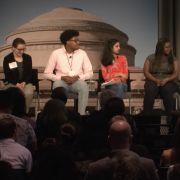
MIT and the Legacy of Slavery: Community Dialogue
At an event on February 16, 2018, 250 members of the MIT community gathered to explore the initial findings from the “MIT and Slavery” class, first taught in the Fall of 2017. More

Beethoven, Quarantined
During the Spring 2020 pandemic lockdown, MIT music professor Evan Ziporyn transformed his Symphony Orchestra class (21M.421) into a remote, online learning experience at lightning speed. Absent the essentials of a space with good acoustics, access to instruments — and the physical presence of other musicians — Ziporyn and 40 undergraduates, now scattered across several countries, found new ways to make their music come alive. More

Dissertation (Un)interrupted
MIT Political Science PhD candidate Aidan Milliff discusses completing his dissertation during the Covid-19 pandemic More

Voices of MIT Students: Quaranteen
Music video by Kyle Markland '22, a member of the MIT Symphony Orchestra More
Waves of Globalization | The 2018 World Economic History Congress at MIT
The world's leading economic historians answer one question. More
Digital poetics and creative computing
Professor Nick Montfort describes his work in digital poetry. More

D. Fox Harrell tells the story of virtual identities
How are online identities changing how we interact? More

Essential: The MIT School of Humanities, Arts, and Social Sciences
Video: 100% of MIT undergraduate study the humanities, arts, and social sciences. Here's why. More
Practicum: Directing Einstein's Dreams
Neerja Aggarwal, SB ’17, MEng ’18, discusses the rewards and challenges of directing Einstein's Dreams, an adaptation of the acclaimed novel by MIT writing faculty Alan Lightman, as her Theater Arts senior thesis project. More
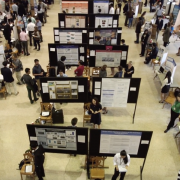
Video: The 2017 MIT INSPIRE fair
Highlights from the 2017 MIT INSPIRE fair, the first and only national high school competition for research in the humanities, arts, and social sciences. More
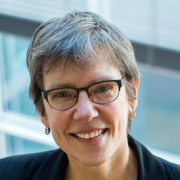
Sally Haslanger interviewed on Up Close
MIT philosopher and social theorist Sally Haslanger outlines the persistence of ideologies like racism or sexism that entrench injustice or privilege, and how we might best combat deeply embedded misconceptions that endure in our societies in defiance of evidence or reasoned argument. Watch
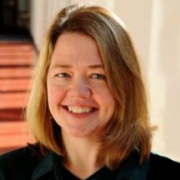
Podcast: MIT Literature's Diana Henderson
MIT Literature Professor Diana Henderson participates in a roundtable discussion about challenges for young scholars. Watch
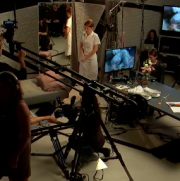
Makan and Scheib's adaptation of Persona
The a filmed scene from the opera "Persona" — after the film by Ingmar Bergman — composed by Keeril Makan, libretto by Jay Scheib, music direction by Evan Ziporyn. Watch
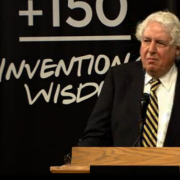
Finance in Action
Part of the MIT+150 celebration | Stewart Myers introduces the panelists as distinguished academics and practitioners who share their innovative application of finance theory to entrepreneurship. Watch
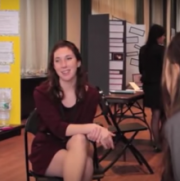
The MIT Inspire Competition
The first and only comprehensive, national high school research competition in the arts, humanities, and social sciences. Organized by MIT students. Visit getinspired.mit.edu for more information. Watch
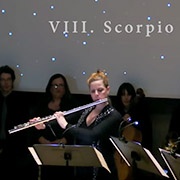
Radius Ensemble: “Scorpio” by Eun Young Lee
A performance by the MIT Radius Ensemble of “Scorpio,” a selection from 12 by Eun Young Lee. Recorded live at the Longy School of Music, Cambridge, MA on March 5, 2016 Watch
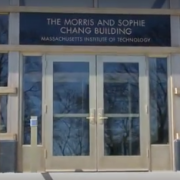
Morris and Sophie Chang Building Dedication
The ceremony to dedicate the Morris and Sophie Chang Building, MIT-E50, which houses the MIT-SHASS Department of Economics, including remarks by President Rafael Reif and Dean Melissa Nobles. Watch

MIT2016 Documentary Series: A Bold Move
With the move to Cambridge and the construction of the Main Group, MIT set out to create a building and an institution like no other. In doing so, the Institute tranformed the City of Cambridge over the last century. Hear stories from MIT’s century in Cambridge—including visions for the next 100 years—through a series of documentaries and video vignettes. Watch
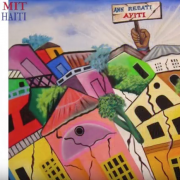
The importance of native languages in education
This video provides a short overview of the science and data that show why children's native languages are necessary for learning to read and write — and everything else. Watch

Catalyst for the Arts
Founded in 1972 by President Jerome Wiesner and his wife, Catherine Stratton, the Council for the Arts has supported a remarkable, flourishing arts culture at MIT by purchasing public art, awarding millions of dollars in grants, and developing relationships with Boston-area arts institutions like the Boston Symphony Orchestra and the Institute of Contemporary Art. “Catalyst for the Arts at MIT” is a brief history of the Council, its efforts, and its powerful legacy. Watch
Examining Ebola Interdisciplinary Panel
An interdisciplinary panel co-sponsored by the MIT Global Health and Medical Humanities Initiative and the MIT Prehealth Advising, Global Education and Career Development Office, with the support of the School of Humanities, Arts, and Social Sciences Anthropology program held on Oct. 28, 2014.
Watch
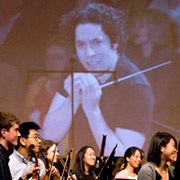
Gustavo Dudamel conducts the MIT Symphony Orchestra
2010 McDermott Award winner Gustavo Dudamel conducts an open rehearsal with the MIT Symphony Orchestra, Friday, April 16, 2010. Dudamel is the Music Director of the Los Angeles Philharmonic. Watch
Metamorphosis of a Crisis
Soon after the beginning of the financial crisis of 2008, sociologist Manuel Castells gathered a group of leading international intellectuals, including MIT historian Rosalind Williams, to think about the nature, causes, and implications of the crisis. “Metamorphosis” is a documentary about their insights.
Watch
Story Collider | Professor Alan Lightman
"Poisons and Passion" — Professor of the Practice of Humanities Alan Lightman novelist, essayist, physicist, and educator, and was one the first people to receive dual faculty appointments in science and in the humanities. In this audio clip, Lightman discusses his former poisons and passions with Story Collider. Listen
Junot Díaz | 2012 MacArthur Fellow
A video from the MacArthur Foundation, about the Pulitzer Prize-winning fiction writer and MIT Professor of Writing, Junot Díaz, who was named a MacArthur Fellow for 2012. The Fellowship is a $500,000, no-strings-attached grant for individuals who have shown exceptional creativity in their work and the promise to do more. Watch

Junot Díaz | Reading at MIT
27 Sept 2012 — The Pultizer Prize-winning author and MIT Professor of Writing spoke to a standing-room-only audience at the Stata Center, taking many questions and reading from his new book This is How You Lose Her. Watch
Kip Hodges PhD'82 | The Scientist as Storyteller
Geologist and professor Kip Hodges PhD'82 calls on his skills as a writer to ask scientific questions, and to shape and share his research. In this video, he describes how knowledge of the humanities and arts helps conduct, convey, and sustain the work of science. Thumbnail photocredit: Arizona State University Watch
John Harbison at the 2012 Aspen Music Festival | Interview and Performance
MIT's Pulitzer prize-winning composer John Harbison talks about his jazz roots, his opera "Great Gatsby" — and performs delicious jazz selections on piano. Performance Today©'s Fred Child interviews Institute Professor of Music, John Harbison, at the 2012 Aspen Music Festival. Watch
MIT health economist Jon Gruber discusses the Affordable Care Act
An architect of both the National and Massachusetts health care plans, Gruber has been interviewed extensively by the national and international media after the Supreme Court decision. Here are a few of the informative videos. Watch

MIT Rambax Ensemble in Senegal
MIT Musicians in Senegal
In January 2012, Rambax MIT traveled to Senegal to study sabar with the Mbaye family. Rambax student, Jess Kim '10, put together this 10-min video to document the group's tour, and to thank the sponsors who made the trip possible. Watch

Is there a future for the euro?
Marco Mazzucchelli audits the conventional wisdom. Watch

Physics On the Fringe
The exotic history of amateur explanations of the universe. David Kaiser, head of the Program in Science, Technology, and Society, joins Tom Ashbrook on NPR's "On Point." Watch
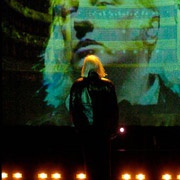
Robert Lepage conducts creative workshop with MIT students
Acclaimed multidisciplinary and performance artist Robert Lepage, winner of the 2012 McDermott Award, conducts a theater workshop with MIT students. Renowned as a director, filmmaker, playwright, and actor, Lepage is currently directing Der Ring des Nibelungen at the Metropolitan Opera in New York. Watch

Sherry Turkle gives a TED talk: Connected, But Alone?
As we expect more from technology, do we expect less from each other? MIT SHASS Professor Sherry Turkle studies how our devices and online personas are redefining human connection and communication—and asks us to think deeply about the new kinds of connection we want to have. Watch
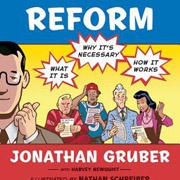
MIT economist Jon Gruber clarifies U.S. health care law in a comic book
"What he’s created makes our health care system understandable and entertaining." — From CBS Boston Watch
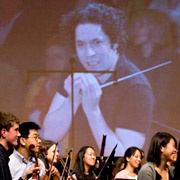
Venezuela's El Sistema
New York Times classical music reporter Daniel J. Wakin discusses the Venezuelan music education program founded by José Antonio Abreu. — New York Times Watch
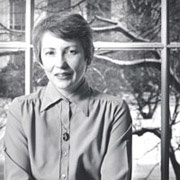
Celebrating Margaret L. A. MacVicar '64
Professor Margaret MacVicar (1944–1991) was a physicist and outstanding educator who founded MIT's widely emulated Undergraduate Research Opportunities Program (UROP), and served as MIT's first Dean for Undergraduate Education. In this video members of the MIT community remember Professor MacVicar and her enduring contributions to the Institute. Watch

Knight Fellows: How the media tells science stories
The MIT Energy Initiative and the Knight Science Journalism Fellowship Program convene four journalists to tell the behind-the-scenes story on how energy stories get told—and spun. Watch

Audits of Conventional Wisdom: Cutting aid to Africa won't help gay rights
Jackee Budesta Batanda "Audits the Conventional Wisdom" of Washington's response to the anti-homosexuality bill in Uganda. In this series of videos, the MIT-SHASS Center for International Studies tours the horizon of the conventional wisdoms that animate U.S. foreign policy, and puts them to the test of data and history. Watch

Audits of Conventional Wisdom Series: Improving Iran-US relations
Abbas Maleki on Iran-US relations. In this series of videos, the MIT-SHASS Center for International Studies tours the horizon of the conventional wisdoms that animate U.S. foreign policy, and puts them to the test of data and history. Watch
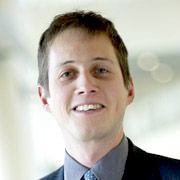
Meet Political Scientist Jens Hainmueller
Hainmueller’s evolution as a political scientist can be seen as a long-term project to tie together qualitative and quantitative ways of thinking about politics and society. While he has always been “excited about using math tools to learn about the world,” Hainmueller has also been drawn to social and economic problems. Photocredit: Stuart Darsch Watch

About Visualizing Cultures
In these videos John Dower shows the Visualizing Cultures program, launched at MIT in 2002 to explore the potential of the web for developing innovative image-driven scholarship and learning. Visualizing Cultures uses new technology and hitherto inaccessible visual materials to reconstruct the past—as people of the time visualized and imagined their own worlds. Watch

Occupy Wall Street after Zuccotti Park
Interview with Sasha Costanza-Chock, Assistant Professor of Civic Media
Much of the reporting on the eviction of occupiers from Zuccotti Park in December 2011, focused on what happens next: can the movement survive without a physical location? Sasha Costanza-Chock, Assistant Professor of Civid Media, in the MIT-SHASS Comparative Media Studies program, has been studying the protests. He talks to Brooke Gladstone at NPR's "On the Media," about what the future holds for the OWS movement, and about how the protestors are organizing digitally in new ways. Watch
50 Years of Linguistics at MIT | A Scientific Reunion | December 2011
Videos of discussions and talks; collections of photographs; poster presentations. To celebrate the first 50 years of MIT’s graduate program in Linguistics, alumni, former faculty and postdoctoral scholars gathered at MIT on December 9-11, 2011. More than 200 people marked the occasion by participating in a discussion of some of the foundational questions investigated by its past and present members. Participants called it "an astonishing weekend of talks and other gatherings." Professor David Pesetsky writes, "Intellectually, it was first-rate and exciting; there were some fireworks (just as we'd hoped), and it was an emotional weekend. Collectively, this was the group that built the field." Watch

The Rise of MIT Humanities, Arts, and Social Sciences
Part of the "Common Threads" video, produced for MIT's 150th anniversary celebration, this three-minute clip features the rise of science, and humanities, arts, and social sciences at MIT. Watch
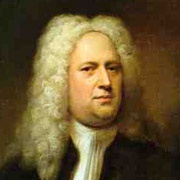
PBS | Ellen Harris, Professor of Music Emerita on George Frideric Handel
Handel’s Messiah is an 18th century oratorio best known for the 'Hallelujah' chorus. This radio program interviews Ellen Harris, Professor of Music Emerita discussing why, 270 years after the work was first composed, it remains one of the most beloved choral works in all of Western music." Watch
Communications in slow-moving crises
"Things seem to be happening both much faster and much slower now, because the density of human presence on the planet speeds up environmental change, and slows down political change—creating a viscosity that makes history work differently.” Watch
Local News in the Digital Age | MIT Communications Forum
Is local news a casualty of the digital age? A recent report from the FCC suggests that although the broad media landscape is more vibrant than ever, many local communities face a shortage of professional reporting, undermining journalism's watchdog rolel. This edition of the Communications Forum assesses the state of local journalism, paying special attention to the environment for news in New England. Watch
2011 Muh Alumni Award Lecture
Given by Dr. Joseph E. Aoun, PhD '82
Dr. Joseph E. Aoun, President of Northeastern University, delivers the Robert A. Muh Alumni Award Lecture in the Humanities, Arts, and Social Sciences. He speaks on "The Future of American Higher Education in the Global Knowledge Marketplace." Recorded at MIT Bartos Theater, 26 October 2011 Watch

Rebuilding the American Economy
MIT Political Science Distinguished Speaker Series
September 2011 | The series brings together faculty, students, local business leaders, state economic officials, and MIT technology and policy thinkers. The emphasis for the first forum was "Rebuilding the American Economy." Several leading MIT faculty review manufacturing topics, after which Ron Bloom, former Senior Counselor to the President, speaks. Robert Solow, Nobel laureate and MIT economist, leads a closing discussion. Watch

Audio Slide-Show: The Kuna Celebrations
In this audio slide-show, James Howe, Professor of Anthropology, tells the story of how a Kuna village prepares for and conducts a great communal celebration, an event that can last up to four days, and embodies many of the Kuna's important values, beliefs, and ways of life. The photographs are from the exhibit of Howe's images which were exhibted recently at the Museo Interoceánico del Canal, Panama's premiere museum. Watch

Political Science at MIT
Richard Locke, Class of 1922 Professor of Political Science and Management, and Head, MIT Political Science, discuses the department's focus on addressing the world's great challenges. Watch
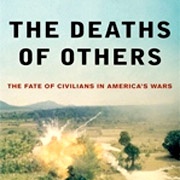
Interview
John Tirman on the fate of civilians in America's wars
Tirman's most recent book, The Deaths of Others, published by Oxford University Press, is a trenchant and passionate work that explores the fate of civilians in America's wars. Watch
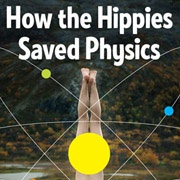
How the Hippies Saved Physics
Professor of History David Kaiser talks about the 1960s-era physicists who transformed the filed of quantum physics. In recent years, the field of quantum information science has catapulted to the cutting edge of physics. Long before the big budgets and dedicated teams, however, the ideas that now occupy the core of quantum information science were generated by a group of young counter-culture physicists. Watch
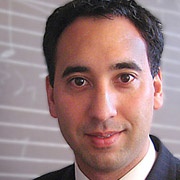
MIT Music Professor Michael Cuthbert and Matthias Röder | How Digital Humanities is Transforming Music Scholarship
"Listening Faster — How Digital Humanities is Transforming Music Scholarship" is part of HyperStudio's humanities + digital conversations in collaboration with Harvard's metaLAB. Watch
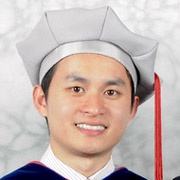
Photo Gallery | 2011 Commencement Reception
Congratulations to our 2011 graduates and their families! The photographs were taken on June 3, 2011, at the School's Commencement Reception, by the photography team of MIT Technique. We hope you enjoy these souvenirs of a memorable day of celebration! View Gallery
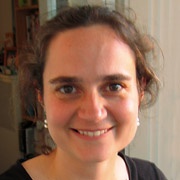
Thought for Food
Heather Paxson, Associate Professor in the Department of Anthropology, discusses what makes an artisan cheese. Watch
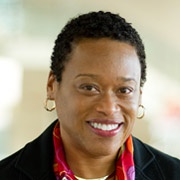
Ideas Matter Series
Immigrants and the Right to Stay
Hosted by the School's Political Science Department and Boston Review, moderated by Melissa Nobles, MIT Professor of Political Science. Joseph Carens argues that unauthorized immigrants who have lived in the US for a sustained period of time should be granted the right to remain in the country. Carens is joined by Carol Swain, Mathias Risse, and Jennifer Hochschild. Watch

CIS Starr Forum | Japan's Nuclear Crisis
March 16, 2011 | MIT experts discuss Japan's nuclear past, present, and future from a political and engineering perspective. The presentation includes an eyewitness account of the crisis and the Japanese government's response. Watch

Inside Tahrir Square | CIS Starr Forum
Greek journalist Iason Athanasiadis offers a remarkably intimate photographic portrait of the Egyptian revolt from its epicenter in Tahrir Square, following the brutal attacks by government loyalists on protesters on January 25th. David Weinberg provides perspectives on US policy in the Middle East. Watch
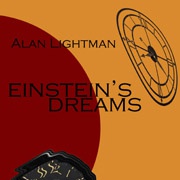
Alan Lightman on art and science
To celebrate the birthday of Albert Einstein, the AMPs team turned to adjunct professor Alan Lightman, best-selling author of Einstein's Dreams, and the first professor at MIT to receive a joint appointment in the sciences and the humanities. In this interview excerpt, the physicist/author examines the role of art in education and our lives. Watch at MIT Tech TV
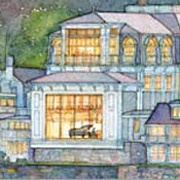
Buildings That Work | David Deveau on the Shalin Liu Performance Center
Deveau, Senior Lecturer in Music and Theater Arts, and Artistic Director of the Rockport Chamber Music Festival (now Rockport Music) appears on Channel 5 in a show about the Shalin Liu Performance Center, Rockport Music's acclaimed new venue. Deveau's leadership over the past decade was instrumental in creating the Center, which opened in June 2010. More
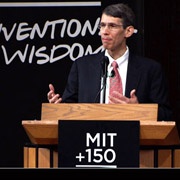
The Evolution of Economic Science: Individual and Firm Behavior
Part of the MIT+150 celebration | Mitsui Professor of Economics, James Poterba moderates a panel of fellow distinguished economists to reflect on MIT's unique contributions to the field, and MIT's role as a place of research, teaching, and influence in the larger world. Watch
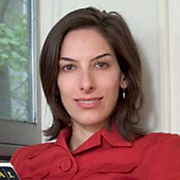
Natasha Schüll discusses her research on 60 Minutes
Lesley Stahl talks with Natasha Schüll, Leo Marx Career Development Professor of Science, Technology, and Society, about her research into immersive, interactive gambling machines and gambling addiction. Watch

Sherry Turkle discusses Alone Together on The Colbert Report
Sherry Turkle, Abby Rockefeller Mauzé Professor of the Social Studies of Science and Technology, talks to Stephen Colbert about her new book, Alone Together, which documents the sometimes-detrimental effects of technology on our human relationships and social lives. Watch

Paul Farmer | Rebuilding Haiti
Difficult as it is to look beyond the acute misery of Haiti’s current crisis, Paul Farmer proposes that aid agencies and others concerned with rebuilding focus on the nation’s “chronic problems.” There’s no shortage of recovery ideas, he says, but these will go nowhere if they do not also advance the long-neglected, basic rights of Haitians. Watch
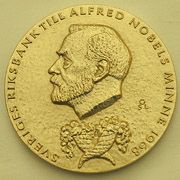
Nobel Prize Lecture | Peter A. Diamond
Peter A. Diamond, Institute Professor of Economics, delivered his Prize Lecture on 8 December 2010 at Aula Magna, Stockholm University. He was introduced by Professor Bertil Holmlund, Chairman of the Economic Sciences Prize Committee. Diamond won the 2010 Nobel Prize in Economic Sciences.
Watch Presentation in Stockholm
Daron Acemoglu selected as a Top Global Thinker for 2010
In the second of a two-part interview, Daron Acemoglu, Charles P. Kindleberger Professor of Economics, talks with Chrystia Freeland of Reuters about the historical roots of economics & political success. Watch

Humanities in the Digital Age
Three distinguished scholars engage in sustained conversation about the value, nature, and mission of the humanities disciplines in the digital age. David Thorburn, MIT Professor of Literature and MacVicar Faculty Fellow Director, MIT Communications Forum; Alison Byerly, Provost & Executive Vice President and Professor of English & American Literatures, Middlebury College; and Steven Pinker, Harvard College Professor, and Johnstone Family Professor of Psychology, Harvard University Watch
Inventing Our Future | MIT's Diversity Story
Unique stories from members of the MIT community: “How do you use the diverse backgrounds of students, faculty, administrators, so that MIT becomes a better place...from a research output perspective?"
MIT Stories at "Inventing our Future"
CIS Starr Forum | Bacevich on Washington Rules
America's Path to Permanent War
According to Andrew J. Bacevich, Washington stubbornly sticks to national security policies that don’t work, are devoid of moral considerations, sap the Treasury, and and rob future generations. In a talk that leads to a candid give and take with his audience, Bacevich describes a national security consensus that has, over time, “thrust us into a situation which is really akin to permanent war.” Watch
CIS Starr Forum | Gara LaMarche
Reclaiming the Moral Life of Philanthropy
Gara LaMarche believes the nation’s charitable organizations have lost “moral clarity,” growing more concerned with “the fix, the intervention, than about reasons for doing or caring about what is right." Introduced by Dean Deborah Fitzgerald. Watch

Evan Ziporyn: Carnegie Hall interview
Balinese Music as Inspiration
In the first installment of a video interview for Carnegie Hall's Sound Insights series, Evan Ziporyn, Kenan Sahin Distinguished Professor of Music, speaks about how he immersed himself in Balinese music and culture in his early 20s, and how it influenced his compositions for Gamelan, and his musical direction. Watch

The impact of new technologies on education, culture and politics
From the earliest days of Comparative Media Studies (CMS), there has been discussion about how new media shape learning and catalyze novel forms of expression and engagement. Over the years, as Henry Jenkins and the five panelists in this video attest, the CMS community has refined and broadened its study of the impact new technologies have on education, culture and politics. Watch

Numbers, Words, Colors | Humanities and Data Visualization
Tools developed by Martin Wattenberg and his associate Fernanda Viégas, have changed the way people look at and use visualizations, by empowering and equipping users with the methodology needed to ask different questions. In this lecture hosted by the HyperStudio, Wattenberg (whose background is in math and computer science) asks how the humanities have influenced the evolution of data visualization and then answers with several examples from his own work. This lecture was part of HyperStudio's humanities+digital conference on visual interpretations. Watch

Nobel laureate Paul Krugman on the current economics crisis: learn from history to help restore the economy
Former MIT Professor of Economics, Paul Krugman PhD '77, spoke to a standing-room only audience in the Stata Center on February 5, 2010 about learning from our own history to help fix the current economic crisis. More
Doing Anthropology
Cultural anthropology is a social science that explores how people understand, and act in, the world. But what, exactly, do Cultural Anthropologists do? How do they approach their research? In this short film, three members of the School's Anthropology section, Stefan Helmreich, Erica James, and Heather Paxson, talk about their current fieldwork. Watch

Rebuilding Haiti
From MIT World - In the aftermath of the January 2010 earthquake, four panelists with strong personal and professional ties to Haiti share their insights about the different paths to rebuilding and reconstructing the country. Watch
Donal Fox Podcast | Tanglewood Jazz Festival
Celebrating 73 summers at Tanglewood in the Berkshire Hills of Lenox, Massachusetts, the 2010 season comes to a close with the Labor Day Weekend Jazz Festival, featuring the Donal Fox Quartet with cellist Maya Beiser. In this BSO video podcast, Fox discusses his "Piazzolla to Bach Project," which will premiere at Seji Ozawa Hall, September 5, 2010. Watch

Gustavo Dudamel on Music and Social Change
In conversation with MIT music luminaries, John Harbison and Tod Machover, and moderator Maria Hinojosa, Dudamel describes El Systema, the remarkable music education system in Venezuela that set him on his path, and continues to inspire his work in the U.S. and around the world. Watch
WBUR | Political scientist Gabriel Lenz
Effects of candidates' appearances on election results
Associate Professor of Political Science Gabriel Lenz has studied how much a candidate's appearance affects an election’s outcome, and the answer is “a lot.” In this audio clip, Lenz speaks with WBUR’s Deborah Becker. Listen
Henry Jenkins | Reflections on MIT
In conversation with William Uricchio, Henry Jenkins returns to reflect on his time at MIT and offers insights into MIT culture, the state of digital cultures and new media, and why the humanities are an invaluable part of an MIT education. Watch
Nocera speaks to Knight Science Fellows on personalized energy
Daniel Nocera, The Henry Dreyfus Professor of Energy and Professor of Chemistry, is swimming upstream in the energy research world. While many scientists work on how to scale up wind, geothermal, or biomass systems, Nocera is focusing on “personalized” energy units that can be manufactured, distributed and installed economically. Watch
Lunch with a Laureate | Robert Merton PhD '70
As an MIT Museum audience peppers him with queries ranging from the barter system to development, trade relations, and the role of intuition in economics, Nobel Prize-winner Robert Merton steers listeners to his areas of expertise—financial engineering and innovation, and risk management. Watch
Misery's Fiend Frankenstein
Adapted by the Mary Shelley novel by Ricardo Pitts-Wiley with Bill Pett and Jim Brown. Directed by Visiting MLK Artist Ricardo Pitts-Wiley and cast with MIT students. Following the performance, a panel of MIT scholars discussed the novel, addressing questions such as what it is about Frankenstein that fascinates us. Watch
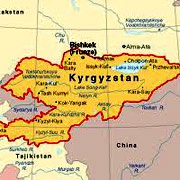
Center for International Studies assesses the crisis in Kyrgyzstan
Featuring Carol Saivetz and Bakyt Beshimov Watch

Tom Pettitt on the Gutenberg Parenthesis
Presented by the MIT Communications Forum | Hosted by James Paradis with respondent Peter Donaldson. Should we view the last 500 years or so of Western culture as a strange interlude, defined by printed page and other artifacts that once dominated the landscape but are now fading in relevance? Watch

Why is the defense budget so big? An Audit of the Conventional Wisdom
This CIS series continues with an analysis of the defense budget—the largest since World War II. Is it a rational response to the threats and the dangers that the United States faces—or not? Benjamin Friedman is a PhD student at the MIT Department of Political Science. He is a member of the Center's Security Studies Program and is a research fellow in defense and homeland security studies at the Cato Institute. Watch

Great Performances Music Sampler
The School's distinguished Music faculty offers MIT students subjects in performance, composition and theory, jazz, world music, and music history. Listen to a sample of great performances by MIT's student musicians. Listen
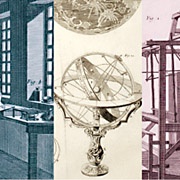
Technology and Enlightenment: Exhibit on Diderot's 18th century Encyclopédie
This MIT Libraries' exhibit explores one of the most important and controversial publications of the eighteenth century, Diderot's Encyclopédie, ou Dictionnaire raisonne des sciences, des arts et des metiers. Watch

Robert M. Solow on the Global Economic Crisis
...and how can we recover?
Nobel Prize-winning economist, vice chairman of the Urban Institute Board of Trustees, and MIT Professor Emeritus, Robert Solow, explains in a four-part video series why a stateside housing slump turned into a global economic crisis, why the bailout was necessary, and how we can recover.
More

On the cutting edge: The Arts at MIT
"The arts at MIT, like science and engineering at MIT, are on the cutting edge of their disciplines, they are serving the students—and in the way they are serving the students, ultimately, they are going to be serving the entire society." — Alan Brody, Playwright and Professor of Theater Arts Take a look!

The Future of Human Spaceflight: The Augustine Report and its Implications
In June 2009, NASA created the Review of U.S. Human Space Flight Plans Committee and charged it with conducting "an independent review of ongoing U.S. human space flight plans and programs, as well as alternatives, to ensure the Nation is pursuing the best trajectory for the future of human space flight – one that is safe, innovative, affordable, and sustainable." Watch
Tom Levenson on Newton and the Counterfeiter
Who knew that one of the world's greatest scientists also worked as a gumshoe on London’s mean streets, or that this same absent-minded professor helped England fix its monetary policy from an office in the Tower of London?Levenson brings all sorts of surprises to light in his sleuthing of a little known but significant episode in British history involving Sir Isaac Newton. Watch

Wayne Marshall featured on PBS Series: Latin Music USA
Mellon Postdoctoral Fellow, Wayne Marshall, appeared in a PBS four-part series on Latin Music in the USA. Click below to watch the series and a bonus clip of Wayne on the connection between Panama and Jamaica. More
Race, Politics, and American Media
The collapse of print and other traditional news and the rise of celebrity culture have contributed to the sharp decline of in-depth stories involving race and society, say these speakers in an illuminating discussion replete with personal anecdotes. Juan Williams, News Analyst for NPR, Political Analyst, Fox News Channel; J. Philip Thompson, MIT Associate Professor of Urban Politics, Department of Urban Studies and Planning; David Thorburn, MIT Professor of Literature and Director of the MIT Communications Forum. Watch
A Conversation between Jay Keyser and Noam Chomsky
Samuel Jay Keyser, Editor-in-Chief of Linguistic Inquiry, has shared a campus with Noam Chomasky for 40+ years via the School's renowned Department of Linguistics and Philosophy. The two colleagues recently sat down to discuss ideas on language evolution and the human capacity for understanding the universe. Listen to the conversation
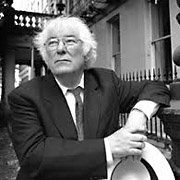
Nobel laureate Seamus Heaney at MIT
Seamus Heaney was awarded the Nobel Prize in Literature in 1995. He has resided in Dublin since 1976 and, every two years, visits Cambridge where he teaches at Harvard University. Heaney's recent books include selected poems Opened Ground: Poems 1966-1996) (1998), an acclaimed translation of Beowulf (2000) and his selected prose Finders Keepers (2002). All are published in America by Farrar, Straus and Giroux. Watch
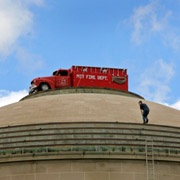
There Hack They
Professor Emeritus of Linguistics, and Special Assistant to the Chancellor, Jay Keyser, believes that the MIT hacker is to be admired for pulling off the collegiate world's cleverest and most elegant pranks. In this video, Keyser describes some of his favorite hacks, and burrows into the psychology of hack culture at MIT. Watch
U.S. Health Care Policy
In an energetic talk delivered prior to the 2008 U.S. presidential election, Jonathan Gruber provides a useful breakdown of the two candidates’ remedies for the nation’s troubled health care system. His detailed analysis of the key issues around health care is invaluable as the health care debate continues. Watch

The Name of the Disease
J-PAL's transformative work in India
This preview of a 2009 documentary presents J-PAL’s investigation of health problems of India's rural poor, and the programs J-PAL and local NGO partners are creating to bring relief. Watch

Moby-Dick for the 21st Century
In this short video, Wyn Kelley, Senior Lecturer in Literature, discusses the powerful themes that make Herman Melville's Moby-Dick alive for the 21st century. "Everyone was on that ship!" she says. Watch

Starr Forum on U.S.-Iran Relations
This panel discussion at the Starr Forum of May 2009 is a clear guide to current U.S.-Iranian relations, presented by moderator Barry Posen (Director of the School's Security Studies Program), and panelists Suzanne DiMaggio, Jim Walsh, and Stephen Heintz. Under the Obama administration, the U.S. is moving toward a better relationship with Iran; panelists explain that achieving real diplomacy will paradoxically require both patience and a sense of urgency. Watch

Mind, Hand, World
The MIT Center for International Studies
The MIT Center for International Studies undertakes research, teaching, international education, and public and policy engagement on a broad range of global issues. Major programs include: MISTI, which sends 300 students annually to internships in labs in 10 countries; the Security Studies Program; the Program on Emerging Technologies, which researches the effects of globalization; the Jerusalem 2050 project; and the Persian Gulf Initiative, which focuses on Iran and Iraq. Watch
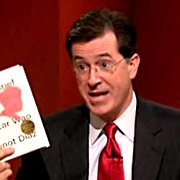
Junot Díaz on The Colbert Report
Stephen Colbert interviews Junot Díaz, Professor of Writing, and Pulitzer Prize winning author of "The Brief Wondrous Life of Oscar Wao" Watch

Exploring the Apollo Legacy
What is the legacy of the Apollo program, and how can it help us meet the challenges of our own time? This short, beautiful film, produced by the MIT AMPS team, kicked off MIT’s "Giant Leaps" event, to commemorate the 40th anniversary of the first lunar landing, and envision the future of spaceflight. Watch
The Future of Science Journalism
President Susan Hockfield states that science journalism “is absolutely indispensable.” As we confront global warming and health pandemics, science reporting must be sustained, Hockfield says, “in its rightful place, at the top of the profession and in the thick of the national conversation.” Dismal economic times are a challenge to this aspiration, as journalists on the panel attest. Watch