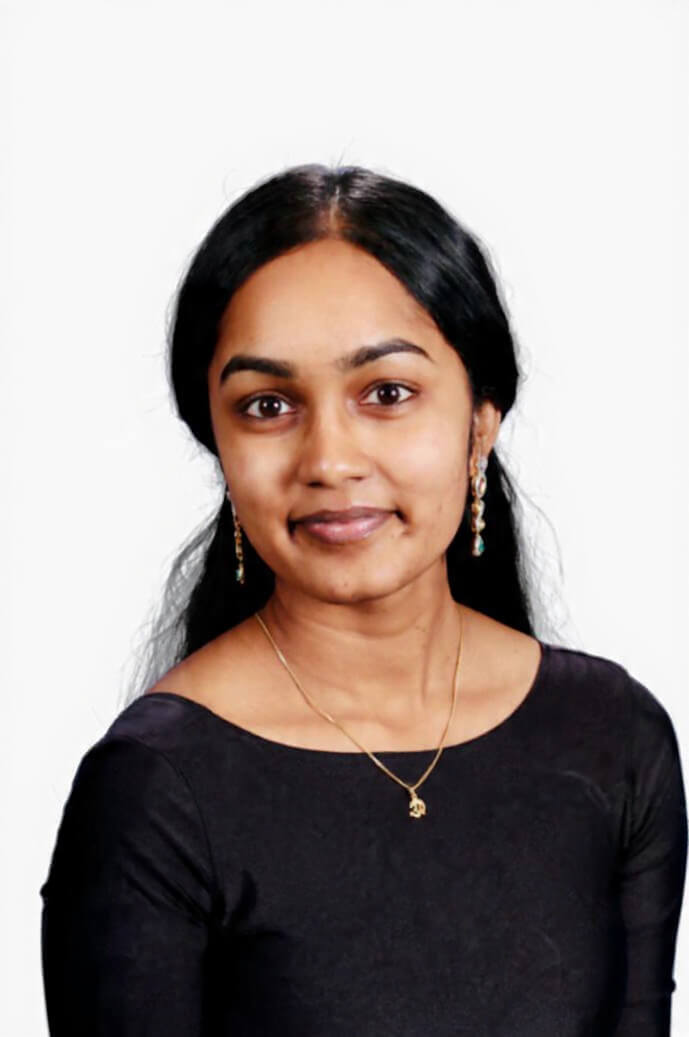
Kannammai (Kanna) Pichappan
Brain and Cognitive Sciences major
Anthropology minor
What’ve you enjoyed most about your area of study? Was there a particular discovery, new skill or way of thinking, or insight that you found especially valuable? Please share an example from your favorite class or experience.
Anthropology has been deeply formative for me because it has helped me cultivate a way of moving through the world characterized by curiosity, humility, and awe. Through courses such as 21A.157 The Meaning of Life and 21A.520 Magic, Science, and Religion, I’ve had the opportunity to practice attending carefully to how people understand their lives, construct meaning, and navigate the worlds they inhabit—and to recognize how lived experience shapes belief, identity, and perception. I am grateful to anthropology because, among many things, it has given me the precious gift of using my one life to thoughtfully encounter and try to understand many different ways of being.
How does the knowledge from this field, or your interest in it, combine with your other major or minor studies at MIT?
The questions that most compel me—both academically and personally—are ones fundamentally grounded in how we experience ourselves, our lives, and the world: Where does our sense of self reside? What gives rise to peace, fulfillment, and meaning? To what extent is our identity rooted within ourselves versus in relationships and community? What enables resilience, growth, and transformation?
Studying both brain & cognitive sciences and anthropology has been a profound opportunity because these disciplines allow me to approach these questions from complementary perspectives. Brain & cognitive sciences offers tools to examine the neurobiological and cognitive foundations of perception, thought, emotion, and behavior, while anthropology situates these within social, cultural, and lived contexts. The integration of these fields is what I find most beautiful, because the answers to these questions become much more meaningful when considered within the lived experiences of individuals and communities.
An MIT education includes study in the scientific, technical, social science, arts, and humanities fields. How do you think that wide range of knowledge and perspectives will be valuable to you – for your career success and for your enjoyment of life?
The breadth of perspectives I have gained through SHASS has been invaluable. It has equipped me to approach scientific and technical problems with an awareness of the systems, environments, and communities in which they exist—and the people whose lives they ultimately affect.
Additionally, SHASS has expanded the ways I think and ask questions, leading me to be more thoughtful about the directions I pursue in life while simultaneously fostering a deeper appreciation for complexity.
What are your plans for the future?
Caring for patients as a child and adolescent psychiatrist and sleep medicine specialist.
Serving as a medical school professor in medical anthropology, the medical humanities, psychiatry, and sleep medicine.
Contributing to academic medicine on (a) mindfulness and preventive psychiatry, (b) the interplay between psychopharmacology and therapy and the flexibility of their interface, (c) psychiatry-informed education and parenting practices, and (d) the investigation of nature vs nurture within the context of psychiatry.
Working to destigmatize conversations around mental health and promote mental health awareness and education within South Asian populations—a community I identify with—both locally and globally.
Writing throughout my life in the form of journalism, opinion pieces, and memoirs at the intersection of medicine, mortality, illness, and the pursuit of meaning.