Guadalupe Hayes-Mota ’08, MBA ’16, SM ’16
MBA ’16
SM Engineering Systems ’16
SB Literature ’08 (Course 21L)
SB Chemistry ’08 (Course 5)
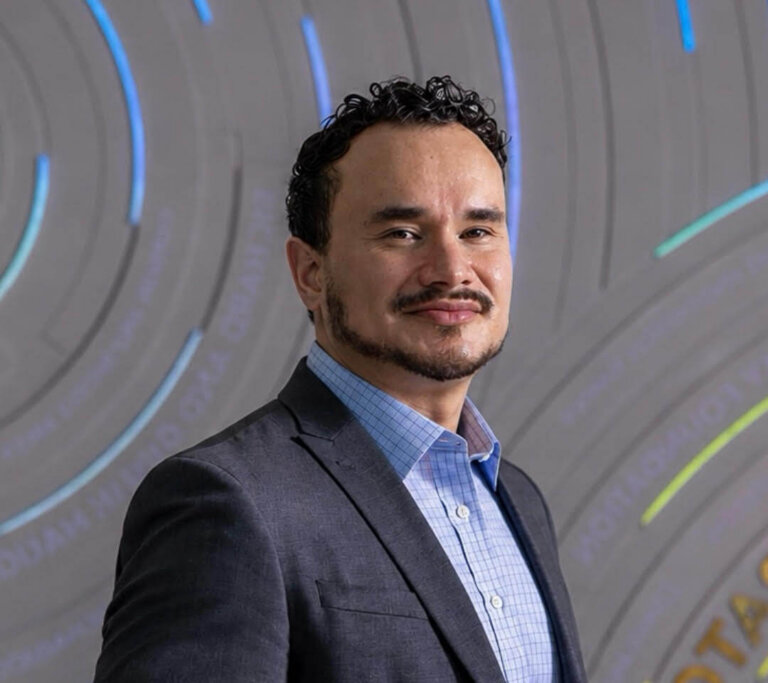
Guadalupe Hayes-Mota earned undergraduate degrees in chemistry and literature and graduate degrees in business administration and engineering systems from MIT. “I currently serve as the Director of the Bioethics Program at Santa Clara University,” he says, “where I help students navigate moral questions shaping medicine and technology.” Hayes-Mota, an entrepreneur who is also a Senior Lecturer in biotechnology and AI ethics at the Institute, investigates the design and ethical use of AI in health care.
Why did you choose to study your fields at MIT?
I came to MIT to study science and prepare for a career in medicine. Along the way, I chose literature because I loved fiction and wanted a deeper way to understand human experience. Science taught me how bodies work; literature taught me how people think, suffer, hope, and make meaning. That combination gave me a language for understanding humanity not in the abstract, but in context. It still shapes how I analyze the world, lead, and make ethical decisions.
What are you doing now?
In addition to my work as a program director and professor, I advise organizations working on the responsible use of AI in health care, including OpenAI, the National Institutes of Health, the World Economic Forum, and the European Commission. Before returning to academia, I founded a biotech supply chain technology company focused on using AI to improve access to medicines. I also continue to teach as a Senior Lecturer at MIT.
What is the focus of your research or work?
My work focuses on how we build and use ethical AI in health care. I am interested not only in what AI can do, but in what it should do: how it can improve care, expand access, protect patients, and keep human dignity at the center of medical innovation.
How did your experience in SHASS help prepare you for what you want to do in the world?
SHASS helped me understand that medicine is never just science. It also includes culture, ethics, access, power, language, and human experience. That perspective has shaped my work in bioethics, where I often sit at the intersection of science, technology, policy, business, and the humanities. My SHASS education gave me the tools to ask not only whether a medical innovation works, but who it works for, who it leaves behind, and how it changes society.
Was there a particular class you took or connection you made in SHASS that had a memorable impact?
Two classes stayed with me. Understanding Culture with Heather Paxson gave me a way to analyze people, institutions, and society with more depth. The fieldwork skills I learned there still shape how I approach bioethics today. European and Latin American Fiction also had a lasting impact because it helped me reconnect with my roots and understand identity, memory, and history through a humanistic lens.