History of SHASS
A history of SHASS
For 75 years, MIT’s School of Humanities, Arts, and Social Sciences has developed the values, vision, and moral compass of tomorrow’s leaders and pursued research that pushes the limits of human understanding.


SHASS traces its roots to MIT’s founding
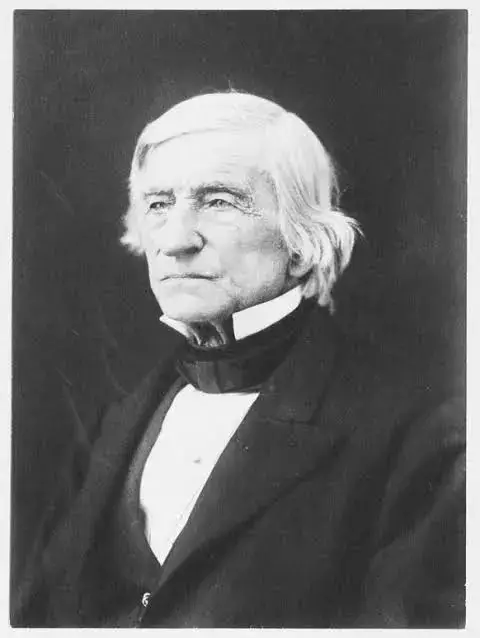
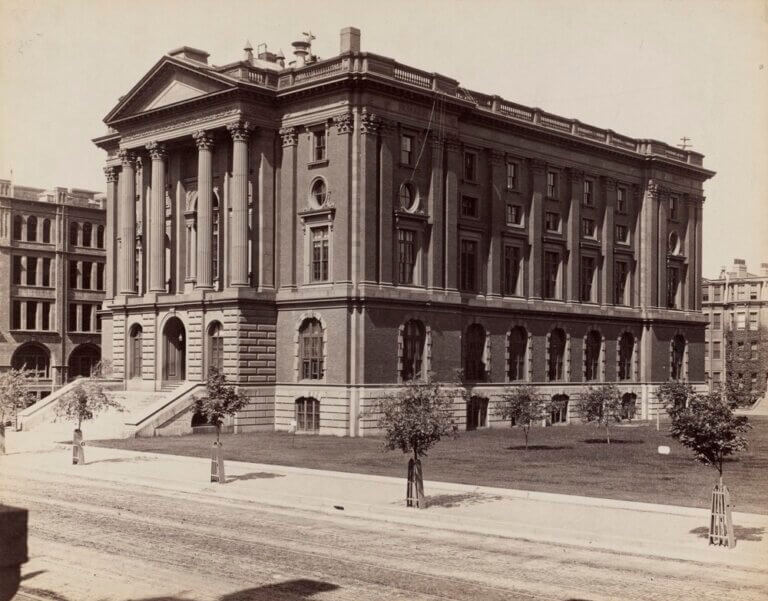
MIT’s School of Humanities, Arts, and Social Sciences (SHASS) traces its roots to the Institute’s founding in 1861, when William Barton Rogers envisioned a general education that combined science and engineering with languages and the study of mind and society. From its earliest years, MIT offered courses in literature, languages, psychology, politics, and music alongside technical training.


Organized music and theater groups appear at MIT
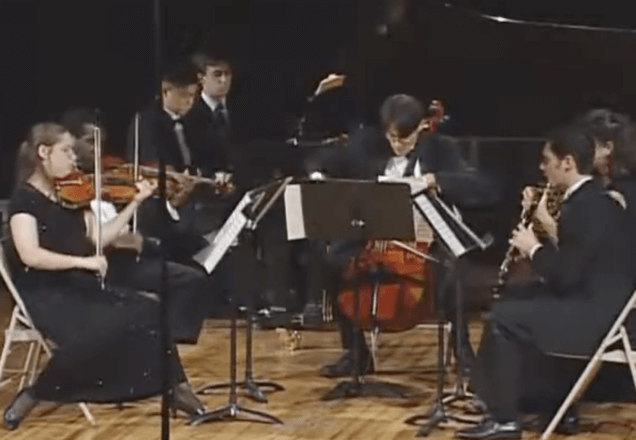
MIT’s organized music groups began in 1884 and evolved into today’s Music program, which includes a conservatory-level track and is central to the MIT experience. Early ensembles included the Tech Orchestra, Banjo Club, and Glee Club. The orchestra re-formed several times before 1947, when Klaus Liepmann, MIT’s first full-time music professor, became director and founded the modern program.
In 1927, Dramashop’s first production, The Hairy Ape by Eugene O’Neill, launches the co-curricular student theater group open to all members of the MIT community.

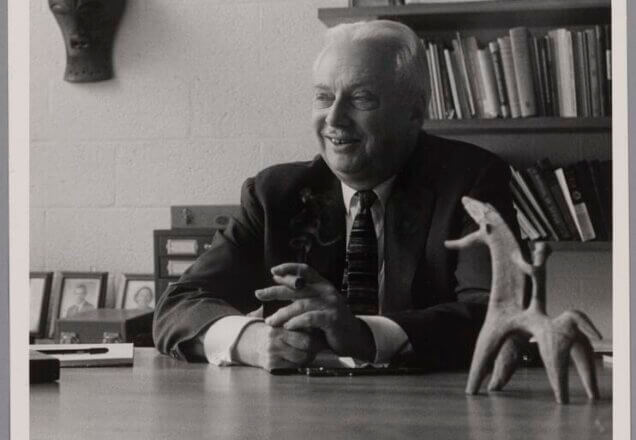
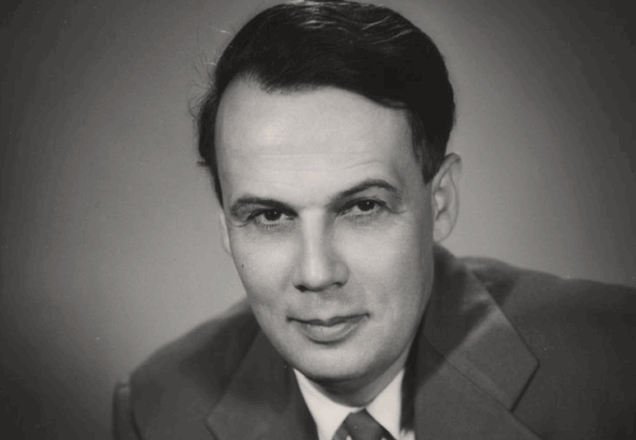
Klaus Liepmann (1907-1990), MIT’s first full-time professor of music and founder of the music program, became director of the MIT Glee Club, the Symphony and the Choral Society.
Elevating the humanities and social sciences at MIT
During President Karl Taylor Compton’s administration (1930–1949), MIT strengthened the humanities and social sciences, and in 1932 adopted a new administrative plan creating three schools and a Division of Humanities. The division did not grant degrees but provided instruction in fields ranging from English, history, economics, and languages to sociology, government, philosophy, psychology, music, and the fine arts, and it also oversaw some extracurricular activities such as drama and museum exhibits.
Several departments were placed within the division in 1932, which was led by a dean reporting to the vice president and president; Edwin S. Burdell became the first dean in 1937, followed by Robert Granville Caldwell in 1938.

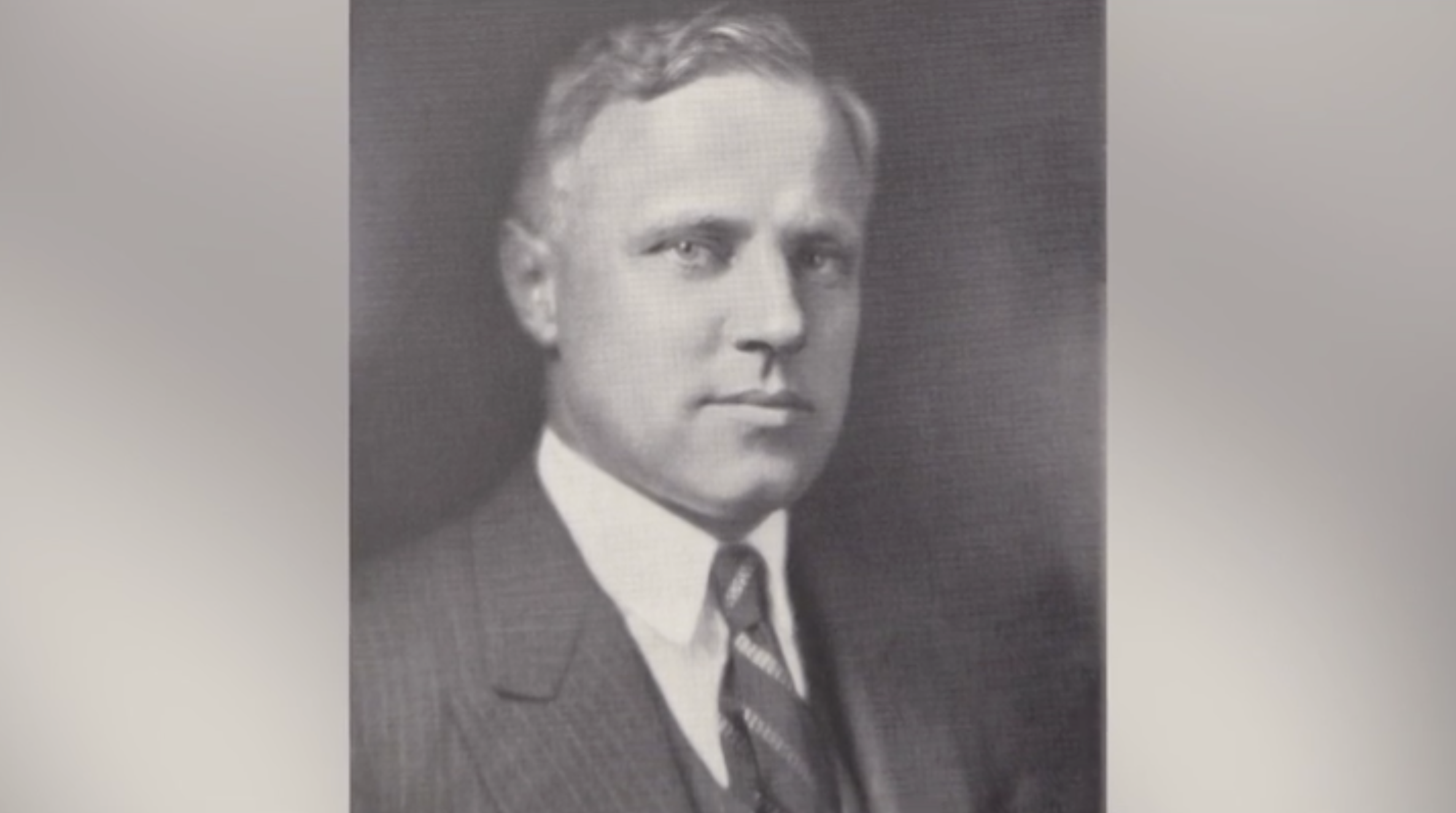
Karl Taylor Compton, MIT’s President from 1930-1948, modernized the Institute and served as a public champion of science and technology.
Four-year program in the humanities created
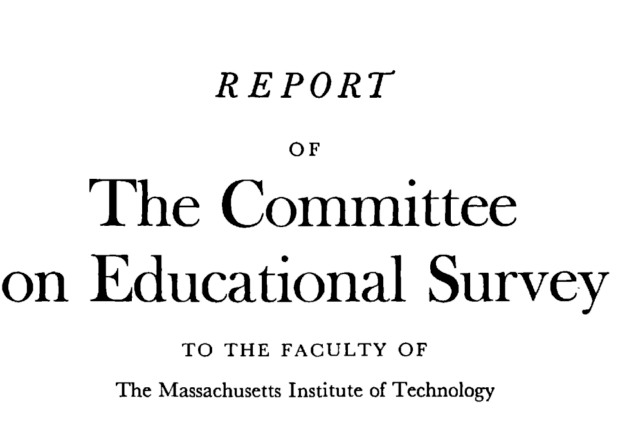
In 1944, a four-year program of required courses in the humanities and social sciences for undergraduates is adopted by the MIT faculty. The Committee on Educational Survey, also known as the Lewis Committee, publishes its report in 1949 and calls for the establishment of a School of Humanities that can grant degrees.
School of Humanities and Social Studies founded
The School of Humanities and Social Studies is established in December 1950, with John Ely Burchard as its first dean, and the Center for International Studies is founded the same year within the School. A Department of Humanities is created in 1954, incorporating English, History, and related fields, while psychology and political science sections are established within Economics and Social Science in the 1950s.
In 1955, Course XXI enables students to combine humanities or social sciences with science or engineering, and a graduate program in political science begins in 1958. The School is renamed the School of Humanities and Social Science (SHSS) in 1959.

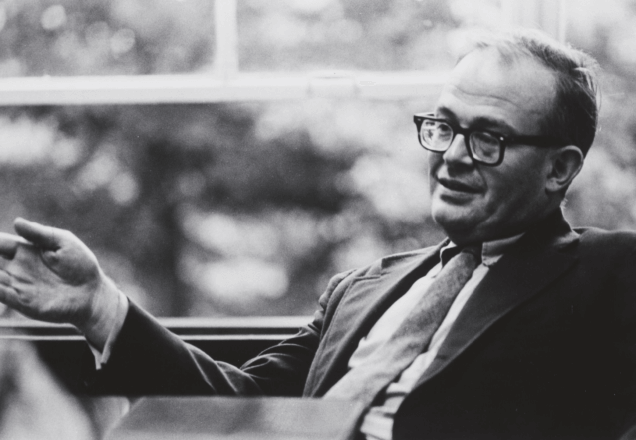
John Ely Burchard served as Dean of the Humanities from 1948 to 1964.
Defining the mission and structure of SHSS
Dean Harold John Hanham is appointed in 1973; during his tenure SHSS articulates a three-part mission: to maintain strong graduate programs, to fulfill MIT’s humanities requirement as general education, and to support undergraduate majors. That same year, the Technology Studies Program is created to link humanities more closely with science and engineering.
Organizational changes follow: foreign languages and linguistics are folded into the humanities in 1975; philosophy and linguistics merge in 1976 to form Linguistics and Philosophy, with a new Language and Mind major; and in 1977 the Technology Studies Program merges with the Program in Science, Technology, and Society.
Ann Fetter Friedlaender is appointed dean in 1984. During her tenure, the Women’s Studies Program is founded, the Department of Psychology leaves SHSS to join Brain and Cognitive Sciences, and the Statistics Center moves to SHSS.

Harold John Hanham served as dean of the School of Humanities and Social Science from 1973 to 1984.
Becoming SHASS and celebrating 50 years
Philip Khoury becomes acting dean in July 1990 and is appointed dean in 1991, serving until July 2006, when he becomes Associate Provost for the Arts at MIT. In July 2000, the name of the school changes — from the School of Humanities and Social Sciences to the School of Humanities, Arts, and Social Sciences (SHASS) — to recognize the breadth and contributions of the arts at the Institute. Later that year, the School celebrates its 50th anniversary with a two-day symposium.
Deborah K. Fitzgerald becomes interim dean in July 2006 and is named Kenan Sahin Dean in January 2007. During her tenure, she strengthens undergraduate humanities, arts, and social sciences requirements; restructures academic units; helps launch MIT CAST; and supports the growth of MISTI, MIT’s international education program preparing students for global collaboration and leadership.
In July 2015, Melissa Nobles, Professor of Political Science and former Head of the Department of Political Science, takes office as the Kenan Sahin Dean. Nobles continues to serve as dean through August 2021, when she becomes the Chancellor of MIT.

The 50th anniversary celebration for arts and humanities programs at MIT featured several symposia and a medal ceremony held on Oct. 6 and 7, 2000.
A new home for MIT Theater
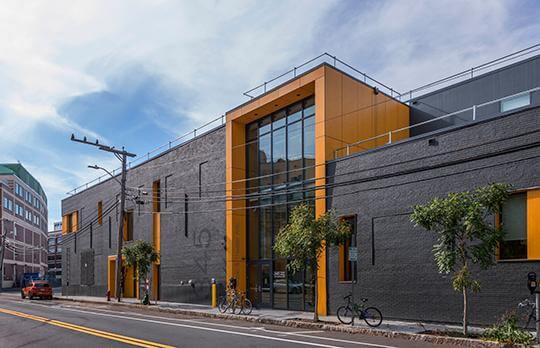
In 2017, MIT opens W97, a new home for theater. Of the new building, MIT President L. Rafael Reif says, “Like the main group buildings at the heart of campus, W97 embodies and encourages MIT’s signature openness, flexibility, and boldness.”
Also in 2017, a new major, 6-14: Computer Science, Economics, and Data Science, is launched jointly by the computer science and economics departments. In 6-14, students learn computing fundamentals, such as programming and algorithms, and receive a multifaceted view of data science, from machine learning to econometrics. The major also covers economics concepts such as game theory, incentives, and multiagent systems.
In 2019, David Kaiser, the Germeshausen Professor of the History of Science and professor of physics, is named an associate dean of the Social and Ethical Responsibilities of Computing (SERC), a cross-cutting initiative within the MIT Schwarzman College of Computing.

The rejuvenation of a former warehouse on Vassar Street created a home for MIT’s vibrant Theater program, a central component of the Institute’s world-renowned arts curriculum.
MIT Human Insight Collaborative launches
Agustín Rayo, Professor of Philosophy, begins serving as the Interim Dean of MIT SHASS in August 2021 and is appointed Dean in January 2022.
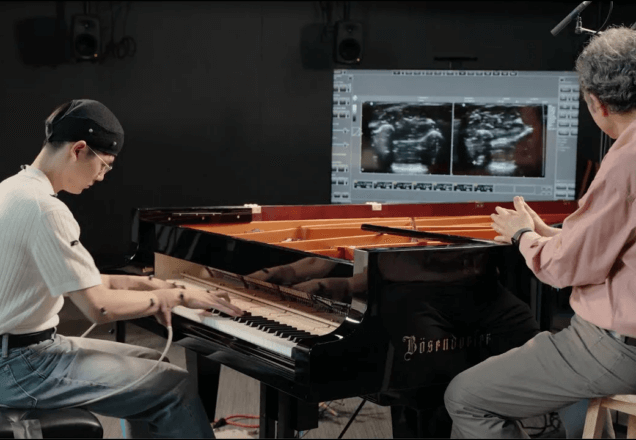
In September 2024, under the leadership of President Sally Kornbluth, MIT launches a new initiative: the MIT Human Insight Collaborative (MITHIC), led jointly by Dean Rayo and Provost Anantha Chandrakasan. MITHIC is designed to elevate human-centered research and teaching across the Institute.

The MIT Human Insight Collaborative (MITHIC) is a presidential initiative with a mission of elevating human-centered research and teaching and connecting scholars in the humanities, arts, and social sciences with colleagues across the Institute.
The evolution of MIT Music
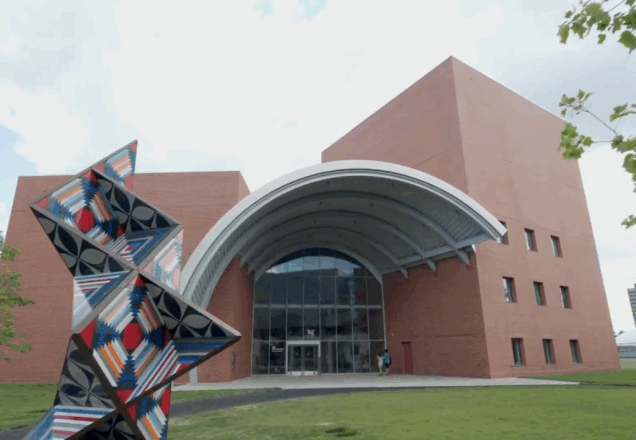
In February 2025, the Edward and Joyce Linde Music Building opens. The 35,000-square-foot building has three corresponding volumes — the Thomas Tull Concert Hall, the Jae S. and Kyuho Lim Music Maker Pavilion, and the Beatrice and Stephen Erdely Music and Culture Space. The building gives MIT’s musicians “the conservatory-level tools they deserve,” says MIT President Sally Kornbluth.
In Fall 2025, MIT launches the Music Technology and Computation Graduate Program, a collaboration between the Music and Theater Arts Section in SHASS and the School of Engineering.
In February 2026, music professor Keeril Makan is named Vice Provost for the Arts.

Fully opened in February 2025, the Linde Music Building provides a centralized facility for music instruction and performance, with top-quality rehearsal spaces, recording studios, and new labs for music technology.