Panelists, Moderators, and Performers
Welcome and Introductions
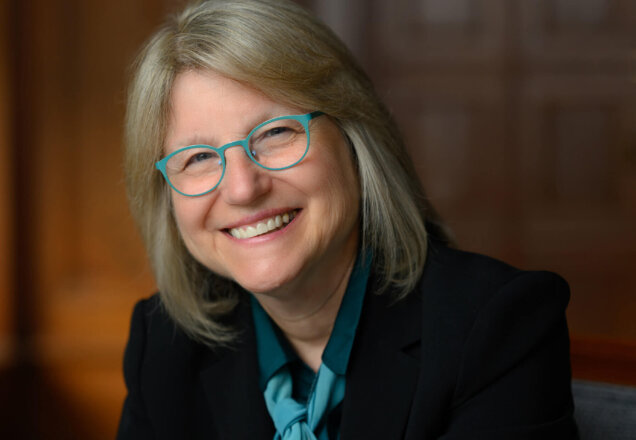
Sally Kornbluth
Sally Kornbluth is President of the Massachusetts Institute of Technology. During her tenure, she launched the Climate Project at MIT, introduced the MIT Human Insight Collaborative (MITHIC), and welcomed the MIT Health and Life Sciences Collaborative (MIT HEALS). Later, Kornbluth introduced the MIT Generative AI Impact Consortium (MGAIC) and launched the MIT Initiative for New Manufacturing. In her research, Kornbluth focused on processes that are key to understanding cancer as well as various degenerative disorders. She has published extensively on how cancer cells evade apoptosis and how metabolism regulates the cell death process.
Kornbluth earned a BA in political science from Williams College, a BA in genetics from Cambridge University, and a PhD in molecular oncology from Rockefeller University. She completed postdoctoral training at the University of California, San Diego.
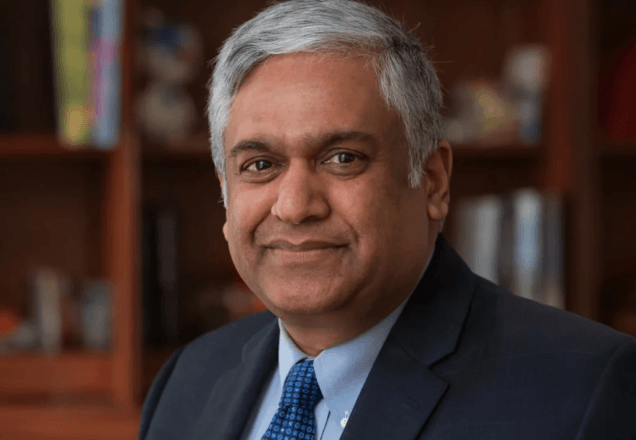
Anantha Chandrakasan
Anantha Chandrakasan is MIT’s provost and the Vannevar Bush Professor of Electrical Engineering and Computer Science. Reporting to MIT’s president, Chandrakasan is the Institute’s chief academic and budget officer. He previously served as dean of MIT’s School of Engineering and as the Institute’s inaugural chief innovation and strategy officer. Chandrakasan also served as director of the MIT Microsystems Technology Laboratories and was head of the Department of Electrical Engineering and Computer Science (EECS). Chandrakasan is also the executive senior advisor to the MIT Climate and Sustainability Consortium (MCSC) and serves as co-chair of the MIT-IBM Computing Research Lab, which he founded.
Chandrakasan earned his bachelor’s, master’s, and doctoral degrees in electrical engineering and computer sciences from the University of California, Berkeley.
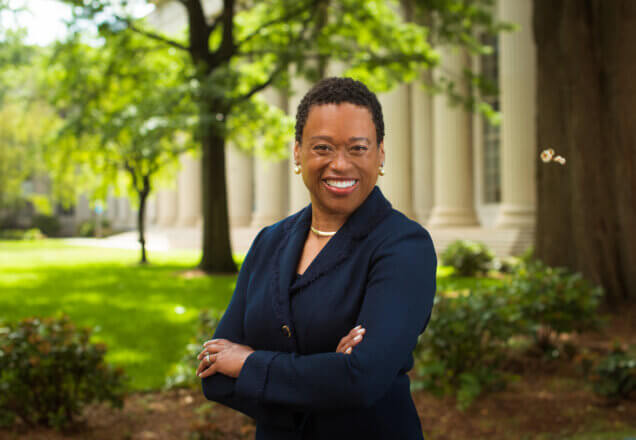
Melissa Nobles
Melissa Nobles is Chancellor of the Massachusetts Institute of Technology and the Class of 1922 professor of political science. The chancellor oversees student life and learning at MIT. The chancellor works closely with the MIT Corporation, the President, the provost, vice presidents, vice chancellors, and other senior leaders to develop and implement the Institute’s strategic priorities. Nobles oversees more than 60 interconnected offices that support undergraduate and graduate students’ academic success, foster community and wellbeing, and cultivate personal and intellectual growth. Nobles’ international, comparative research focuses on restorative justice in light of ethnic and racial conflicts.
She graduated from Brown University with a degree in history and received her MA and PhD in political science from Yale University. She has held fellowships at Boston University’s Institute for Race and Social Division and Harvard University’s Radcliffe Center for Advanced Study.

Agustín Rayo
The MIT School of Humanities, Arts, and Social Sciences is led by the Kenan Sahin Dean Agustín Rayo PhD ’01. Dean Rayo is a professor of philosophy. His research lies at the intersection of the philosophy of logic and the philosophy of language.
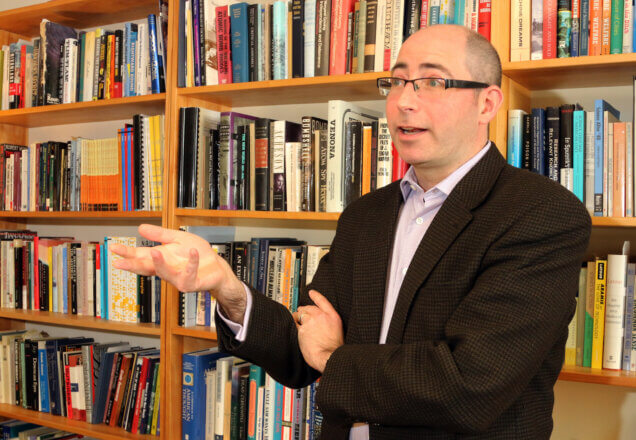
David Kaiser
David Kaiser is the Germeshausen Professor of the History of Science, in the Program in Science, Technology, and Society and Professor of Physics Department of Physics at the Massachusetts Institute of Technology. His historical research focuses on the development of physics in the United States during the Cold War, looking at how the discipline has evolved at the intersection of politics, culture, and the changing shape of higher education. His physics research centers on early-universe cosmology, working at the interface of particle physics and gravitation, with a focus on primordial black holes.
Kaiser completed an AB in physics at Dartmouth College and PhDs in physics and the history of science at Harvard University.
Democratic Participation and Processes
What makes democracy work? How do people participate in the democratic process? Why do some voices get heard and others don’t?
Join us for a conversation as we investigate these critical questions and investigate the mechanisms of democratic participation—from voting systems and political persuasion to social movements and civic engagement.
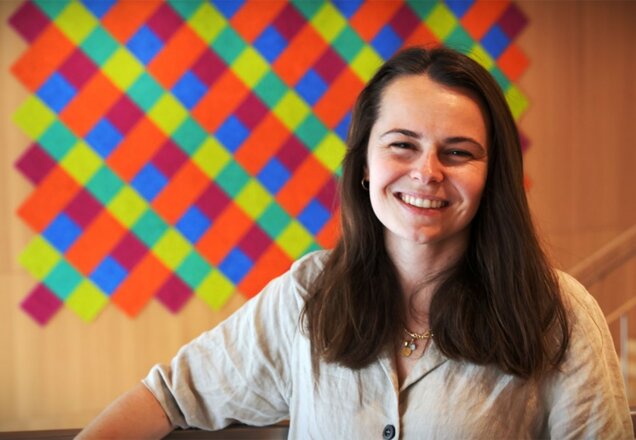
Bailey Flanigan
Bailey Flanigan is the Theodore T. Miller (1922) Career Development Assistant Professor at MIT, cross-appointed in political science and computer science (LIDS). Her work uses methods from political theory, political methodology, algorithms, statistics, and social choice to design democratic tools for enhancing public participation. Applications of her work include sortition and deliberative democracy, participatory budgeting, ranked-choice voting, and participatory design of algorithms.
Flanigan earned a BS in Bioengineering and a Certificate in Math from the University of Wisconsin and a PhD in computer science from Carnegie Mellon University.
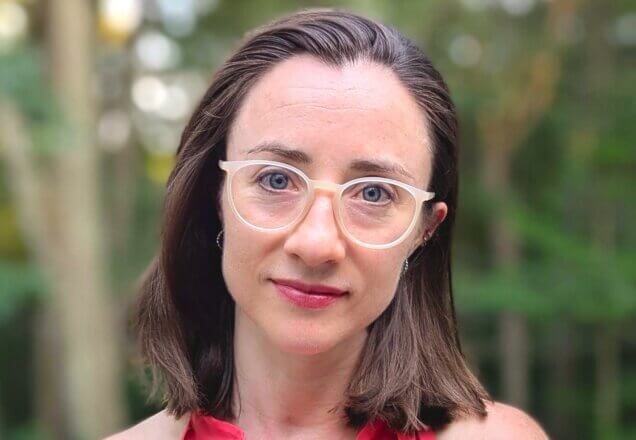
Rebekah Larsen
Rebekah Larsen is the Old Dominion Career Development Assistant Professor in Comparative Media Studies/Writing. She completed her PhD in sociology at Cambridge University, and is a Faculty Associate at Harvard Law School’s Berkman Klein Center. Her work uncovers and analyses understudied media ecosystems, with special attention to sociotechnical change and power relations within these systems. Recent scholarly sites of inquiry include ethnographic work in conservative, rural media spaces; the new global network of fact checkers funded by social media platform content moderation contracts; and search engine manipulation of journalists and activists around a controversial privacy regulation. Her publications have variously addressed leaked personal data from platform whistleblowers; tradeoffs in platform-journalist partnerships; and changes in the fact-checking field around publics and technologies.
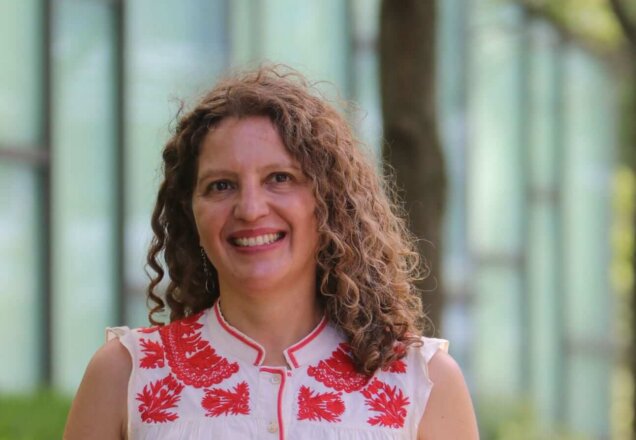
Tanalís Padilla
Tanalís Padilla is the Leverett Howell Cutten ’07 and William King Cutten ’39 Professor in the History Section. She teaches and writes about Latin America. Her first book, “Rural Resistance in the Land of Zapata,” recounts the history of an agrarian movement that turned to armed struggle during an era of Mexican history previously considered one of social and political stability. Her newest book, “Unintended Lessons of Revolution: Student Teachers and Political Radicalism in Twentieth-Century Mexico,” traces the history of the educational institutions that trained thousands of teachers from rural, poor, and indigenous backgrounds. These works (which have been translated into Spanish and published in Latin America), as well as her numerous other academic and public-facing articles, explore questions of consciousness, political mobilizations, international solidarity, social justice, and public health. She is currently writing a book on Cuban medical internationalism that explores the history of the over 600,000 doctors the island has sent to over 160 nations, mostly in the Global South.
Padilla earned her PhD from the University of California, San Diego and her BA from Pomona College.
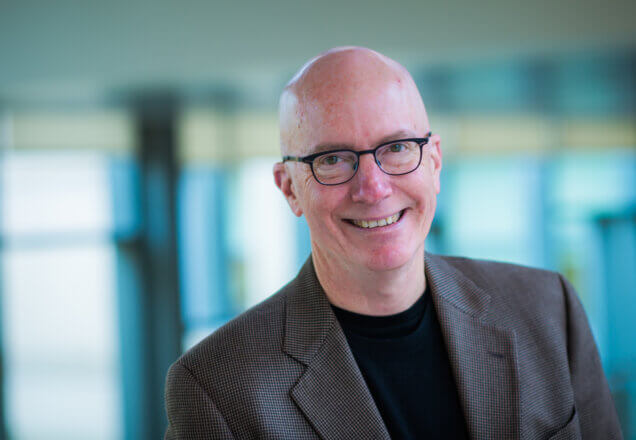
Charles Stewart, III
Charles Stewart, III is the Kenan Sahin (1963) Distinguished Professor of Political Science in the Department of Political Science and the Founding Director of MIT’s Election Data and Science Lab. His research about Congress touches on the historical development of committees, origins of partisan polarization, and Senate elections. He is also an established leader in the analysis of the performance of election systems and the quantitative assessment of election performance.
Stewart earned a BA from Emory University and an MA and PhD from Stanford University.
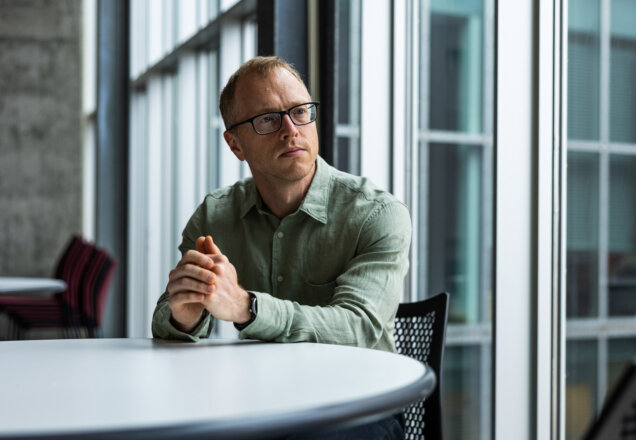
Brian Hedden PhD '12
Brian Hedden PhD ’12 is a Professor of Philosophy at MIT, with a shared appointment in the Schwarzman College of Computing. He currently serves as co-Associate Dean for Social and Ethical Responsibilities of Computing (SERC). Professor Hedden’s research focuses on rationality and ethics, and he has written on a wide range of topics, including algorithmic fairness, legal standards of proof, collective action problems, and political polarization, among others. He is the author of “Reasons without Persons: Rationality, Identity, and Time” as well as numerous articles.
Hedden earned his AB from Princeton and his PhD from MIT, and he was a postdoc at Oxford and at the University of Sydney and then the Australian National University.
Teaching and Learning Innovations
If you want to make the world a better place, you need to understand how it works
SHASS plays an essential role at MIT to ensure our students have a deep understanding of the human implications of the world’s biggest challenges.
Panelists will discuss their approach to teaching and how they’re innovating instruction to keep up with a fast-changing world.
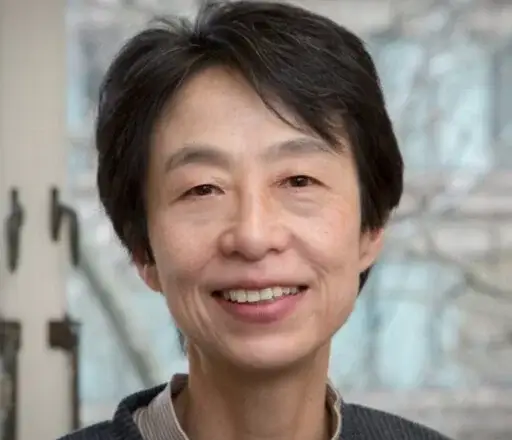
Takako Aikawa
Takako Aikawa is a Senior Lecturer in Japanese. Her work explores how AI can enrich human-centered language learning, especially through personalized learning and the use of custom large language models. She previously worked at Microsoft Research in machine translation and natural language processing. Her current research centers on technology-enhanced language teaching, with a particular focus on the pedagogically grounded integration of artificial intelligence into language education. She has held teaching positions in Japanese at universities in both Japan and the United States, bringing together expertise in language pedagogy and language technology. She is currently developing an AI-augmented pedagogical framework, FLaP (Fluid Language Pedagogy), which reimagines language learning as a learner-centered process supported by guided personalization, learner agency, and teacher scaffolding.
Aikawa earned a BA from Japan’s Tsuda University and an MA and a PhD from Ohio State University.
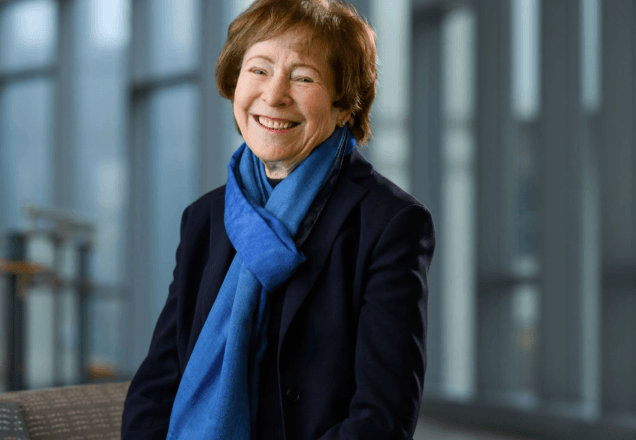
Suzanne Berger
Suzanne Berger is an Institute Professor in the Department of Political Science. She launched the MIT Science and Technology Initiative (MISTI). She later co-founded the Initiative for New Manufacturing (INM), an MIT Presidential Priority project. She is the author of books and articles—from her first, on French peasants (Peasants Against Politics) to studies of globalization, manufacturing, and offshoring: “How We Compete” and “Making in America: From Innovation to Market“. Her study of globalization before World War I, “Notre Première Mondialisation“, was awarded the Prix Européen du Livre d’Economie. She has been elected to the American Academy of Arts and Sciences. The French government has awarded her the Légion d’Honneur, Palmes Academiques, and l’Ordre National du Merite.
Berger studied at Antioch College, earned a BA from the University of Chicago, and earned an MA and a PhD from Harvard University.
Sara Fisher Ellison '93
Sara Fisher Ellison ’93 is a Senior Lecturer in the Department of Economics. An award-winning educator, she divides her time between research pursuits, teaching, and serving as faculty lead for the Data, Economics, and Design of Policy (DEDP) program. Her main research interest is in empirical industrial organization, focusing on two areas, economics of e-commerce and study of firm behavior in the pharmaceutical industry. Her research has been influential within and beyond the field of economics and has resulted in visiting positions in Paris, Munich, Princeton, and Stanford, among others. Ellison received the Levitan Prize for Teaching and the MITx Prize for Teaching.
Ellison earned a PhD in economics from MIT, a diploma of advanced study in mathematical statistics from Cambridge University, and BS degrees in mathematics and statistics from Purdue University.
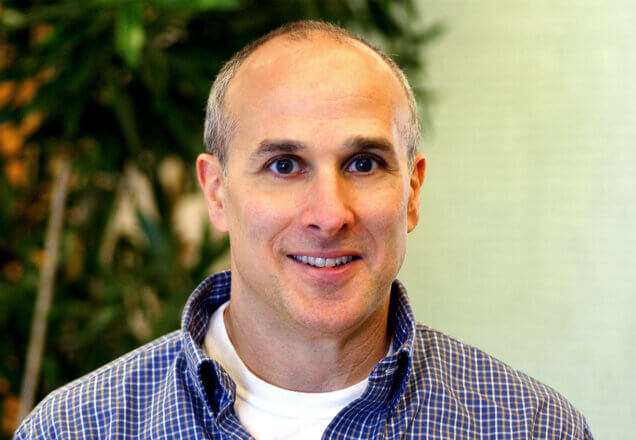
Eric Klopfer
Eric Klopfer is a Professor in Comparative Media Studies/Writing and Director of the Scheller Teacher Education Program and The Education Arcade at MIT. He is a primary investigator with MIT’s RAISE initiative and the new MIT for America initiative. His research focuses on technology and pedagogy for building understanding of science, technology, engineering and mathematics (STEM) and systems. He has special interests in games, simulations and AI/computing pathways to STEM learning. He is the co-author of the books “Adventures in Modeling,” “The More We Know,” and “Resonant Games,” as well as author of “Augmented Learning,” and a work in progress, “AI and the New Purpose of Education.” His lab has produced software and platforms used by millions of people, as well as online courses that have reached hundreds of thousands. Klopfer is also the co-founder and past President of the non-profit Learning Games Network.
Klopfer earned a BS in Biology from Cornell University and a PhD in Zoology from the University of Wisconsin at Madison.
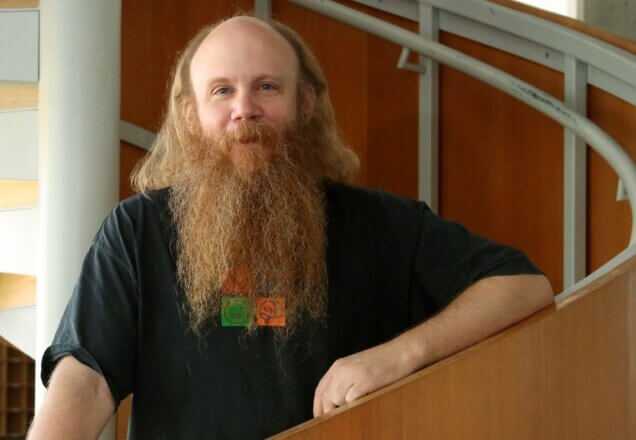
Norvin Richards PhD '97
Norvin Richards PhD ’97 is the Dean’s Distinguished Professor of Linguistics in MIT’s Department of Linguistics and Philosophy. He studies theoretical syntax, and also works with endangered languages. He runs the MIT Indigenous Language Initiative, which supports members of communities with endangered languages with training in linguistics. He’s also been involved in the Wôpanâak Language Revival Project since joining MIT’s faculty. His books include “Uttering Trees” and “Contiguity Theory,” both from MIT Press; he also participated in the creation of a dictionary of the Australian language Lardil, published in 1997. Some of his articles are “Reconstructing stress in Wôpanâak,” “Nouns, verbs, and hidden structure in Tagalog,” and “The Principle of Minimal Compliance.”
Richards earned a BA from Cornell University in 1993, and a PhD from MIT in 1997.
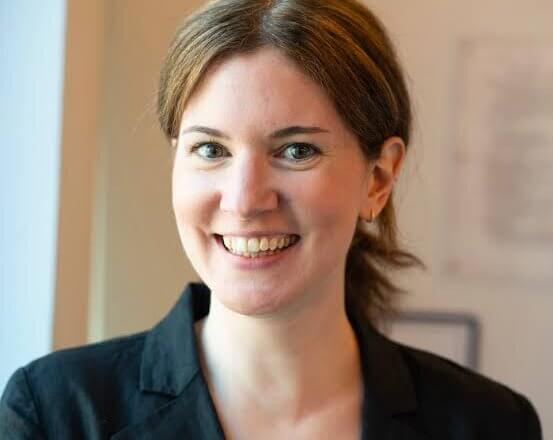
Stephanie Seed
Stephanie Seed is Associate Professor in the Literature Section at the Massachusetts Institute of Technology. She is the author of “Empire of Letters: Writing in Roman Literature and Thought from Lucretius to Ovid” (Oxford, 2019) and numerous essays on the history of the book in Graeco-Roman antiquity and the classical tradition.
Seed earned a BA in Classics from the University of Chicago and a PhD in Comparative Literature from Harvard University.
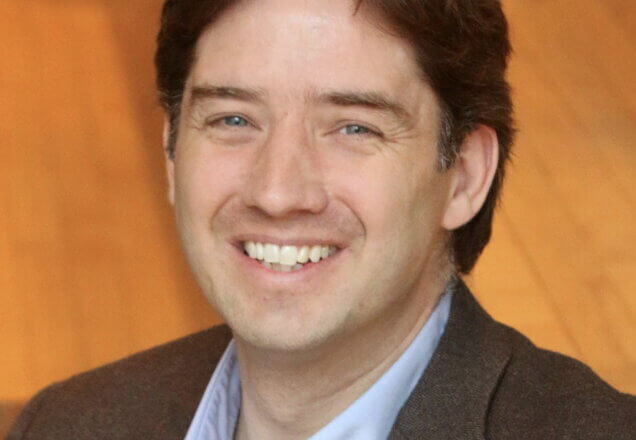
Will Broadhead
Will Broadhead is an historian of the ancient Mediterranean world, specializing in the history of Italy from the 4th-1st centuries BCE and in relations between Rome and the various peoples of Italy in the buildup to their first political unification in the 80s BCE. He has published on the impact of migration in ancient Italy, on Roman colonization, on ethnic contingents in the Roman army, and on the epigraphic record of Osco-Umbrian languages. Professor Broadhead teaches courses on the fall of the Roman Republic, the city of Rome, ancient and modern views of Roman emperors, and a new interdisciplinary subject on the making of Roman Pompeii, taught on-site in Italy. He is also the director of History’s IAP in Italy and IAP in Greece programs. He received the James A. and Ruth Levitan Award for Excellence in Teaching and the Arthur C. Smith Award for Meaningful Contributions and Devotion to Student Life and Learning. He was named a Margaret MacVicar Faculty Fellow, MIT’s highest honor for exemplary and sustained contributions to undergraduate education.
Professor Broadhead received his PhD in Ancient History in 2002 from University College London.
Computing, Self, and Society
Technology is reshaping who we are and how we live together.
Join us for a conversation with SHASS scholars to examine critical questions: How does computing transform society? What are the economic, political, and ethical consequences of AI? Who benefits and who gets left behind?
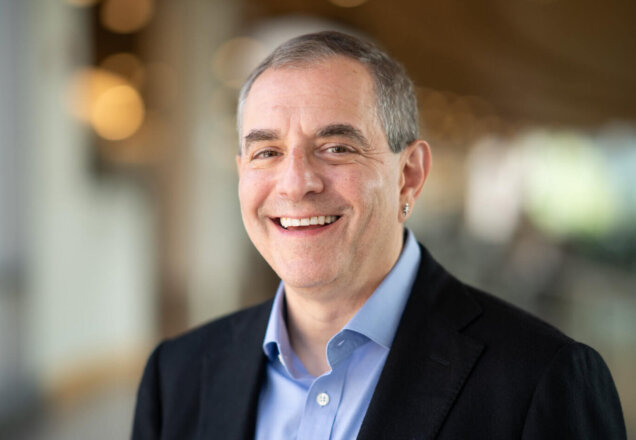
David Autor
David Autor is the Daniel (1972) and Gail Rubinfeld Professor of Economics in the Department of Economics, a Margaret MacVicar Faculty Fellow, and a Google Technology and Society Visiting Fellow. His research explores the labor-market impacts of technological change – including artificial intelligence – and globalization on job polarization, skill demands, earnings levels and inequality, and electoral outcomes.
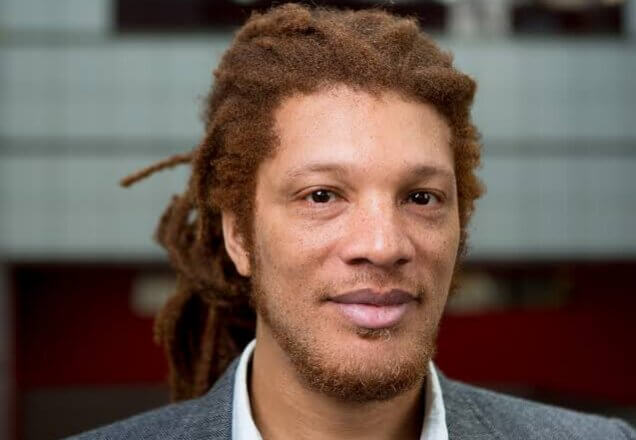
D. Fox Harrell
D. Fox Harrell is Professor of Digital Media, Computing, and Artificial Intelligence at MIT in the Comparative Media Studies/Writing Program, the Computer Science and Artificial Intelligence Laboratory (CSAIL), and the Institute for Data, Systems, and Society. His research explores the relationship between imagination and computation and involves inventing new forms of VR, computational narrative, videogaming for social impact, and related digital media forms. He is the founder and director of the MIT Center for Advanced Virtuality. He is the author of “Phantasmal Media: An Approach to Imagination, Computation, and Expression” (MIT Press). He is a Nebula Award finalist and an Emmy Award winner.
Harrell earned a BS in Logic and Computation and a BFA in Art from Carnegie Mellon University, an MPS in Interactive Communications from New York University, and a PhD in Computer Science and Cognitive Science from the University of California San Diego.
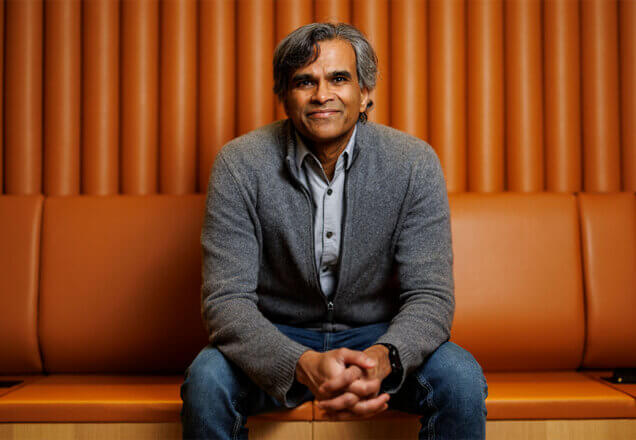
Sendhil Mullainathan
Economist and computer scientist Sendhil Mullainathan is the Peter de Florez Professor at MIT with a shared appointment in the Departments of Economics and Electrical Engineering and Computer Science. His current research is at the intersection of algorithms and people. He is a recipient of the MacArthur “genius” Award, is a winner of the Infosys Prize, has been designated a “Young Global Leader” by the World Economic Forum, labeled a “Top 100 Thinker” by Foreign Policy Magazine, and named to the “Smart List: 50 people who will change the world” by Wired Magazine (UK).
Mullainathan earned a PhD in Economics from Harvard University and a BA in Computer Science, Economics, and Mathematics from Cornell University.

Sherry Turkle
Sherry Turkle is the Abby Rockefeller Mauzé Professor of the Social Studies of Science and Technology in the Program in Science, Technology, and Society at MIT and the founding director of the MIT Initiative on Technology and Self. Turkle writes on the “subjective side” of people’s relationships with technology, especially computers. She is an expert on culture and therapy, mobile technology, social networking, sociable robotics, and generative AI. Her newest book, “Artificial Intimacy: Who We Become When We Talk to Machines“, examines our relationships with chatbots and captures the seductive, beguiling nature of our new faux companions.
Turkle earned a joint doctorate in sociology and personality psychology from Harvard University, an MA in Sociology from the University of Chicago, and a BA in Social Studies from Radcliffe College.
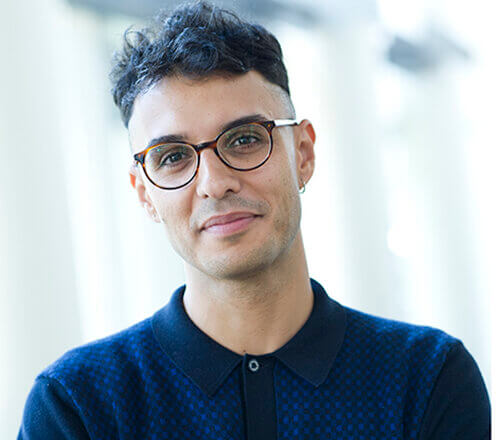
Bernardo Zacka '05
Political scientist Bernardo Zacka ’05 is an Associate Professor at MIT. His work examines how the state is experienced by those who interact with it and those who act in its name. His scholarship centers a form of political theory practiced with an ethnographic sensibility, in which careful description of real places and practices becomes the ground for critique and normative argument. Bernardo’s first book, “When the State Meets the Street,” probes the everyday moral life of street-level bureaucrats. His second book, “Before a Word Is Spoken,” examines what difference architecture and interior design can make at the interface between state and society. Bernardo has been a fellow of the Wissenschaftskolleg in Berlin and the Institute for Advanced Study in Princeton, NJ.
Zacka earned a PhD and an MA from Harvard and holds an SB in Electrical Engineering and Computer Science from MIT.
Performance Showcase

Natalie Lin Douglas
New Zealand-born violinist, educator and arts entrepreneur Natalie Lin Douglas is the founder and artistic director of Kinetic Ensemble, and an associate professor of music at Massachusetts Institute of Technology. With Kinetic, she has overseen the curation of 11 concert seasons and commissioned and premiered over two dozen new works. The ensemble’s recordings, including its Billboard chart-topping debut album from 2023, have been released by Bright Shiny Things, Capella Records, Centaur Records, and Orchid Classics. A versatile chamber musician and fierce advocate for the under-performed repertoire both old and new, Lin Douglas has performed alongside such acclaimed artists as Clarice Assad, Iva Bittova, Jon Kimura Parker, Miguel Zenón, and Evan Ziporyn, and championed the string works of Karim Al-Zand, Gabriela Lena Frank (b. 1972), Zoltán Székely, among others.
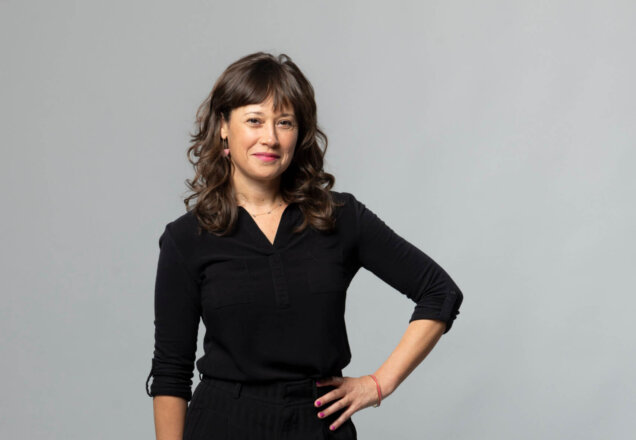
Blythe de Oliveira Foster
Blythe de Oliveira Foster (she/her) is Director of Performance Programs and a Lecturer in MIT’s Theater Arts Program, working at the intersection of performance, place, and community engagement. Recent projects include performing in Italy with Anna-Helena McLean’s A Voice Lesson, acting in Boston’s NETWORK, curating Geo Britto’s workshops at MIT, directing Antigonick, and conceiving Saudades, an immersive installation. She has taught and directed at UC Santa Barbara, Salem State, and Phillips Exeter Academy. Acting credits include American Conservatory Theater, Berkeley Rep, Classic Stage Company, and international touring with Word for Word. Blythe holds an MFA in Acting from Columbia University and trained with Kristin Linklater and Bread & Puppet Theater.

Christian Frederickson
Christian Frederickson (Composer and Audio Designer) is a violist, composer, and sound designer who specializes in live music performance for theater and dance. At MIT, he teaches Sound Design and Producing Podcasts.

Kevin Fulton
Kevin Fulton (he/him) is a Boston-based lighting designer and theater artist. Recent work includes: “A Catoptromancer” (Council for the Arts at MIT); “The Moderate” (Central Square Theatre); “An Irish Carol” (Greater Boston Stage Co.); “Macbeth” (Commonwealth Shakespeare Co.); “The Gaaga” (Arlekin Players Theatre); “Driving in Circles” (Boston Playwrights Theatre); “Former Futures, Let the Right One In” (Boston University); “Cosí Fan Tutte,” “Midsummer Night’s Dream,” and “Marriage of Figaro” (Boston Conservatory Opera). He serves as MIT Theater Arts’ Multimedia Specialist. M.F.A.: Boston University, B.A.: Vassar College.
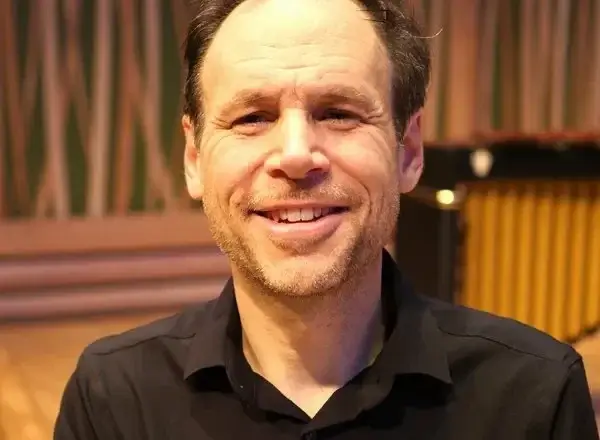
Frederick Harris Jr.
Frederick Harris, Jr. is the Director of Wind and Jazz Ensembles and Senior Lecturer in Music at MIT. He is also the conductor and founder of the Groton Hill Wind Ensemble. Dr. Harris has been highly active with public school students and teachers throughout his career, leading seminars and guest conducting. He has written books and articles related to conducting, jazz, and music performance. Dr. Harris and his students have been featured on NPR, PBS, and have been the subjects of two Emmy-winning documentaries. He is the recipient of two Levitan Awards for Excellence in Teaching and the 2026 recipient of the MIT Dr. Martin Luther King Jr. faculty Leadership Award.

Laura Grill Jaye
Laura Grill Jaye is the Director of the MIT Vocal Jazz Ensemble (VJE) and Lecturer in Music. Founded by MacArthur Fellowship and Pulitzer Prize winner John Harbison, the VJE torch was passed to Laura in 2017. Laura loves to work in all stages of music making. She is a multi-instrumentalist, composer, arranger, improviser, collaborator, performer, and teacher. Laura is half of the musical-writing duo “Grill and Chowder” with Shayok Misha Chowdhury. Their work has been seen or developed at Ars Nova, New York Theatre Workshop, SPACE on Ryder Farm, NYMF, HERE Arts Center, and Joe’s Pub at the Public Theatre. Their show “Artemis in the Parking Lot” was awarded “Best of Fest” at NYMF 2016. They are also winners of a 2021 Jonathan Larson Grant from the American Theatre Wing.
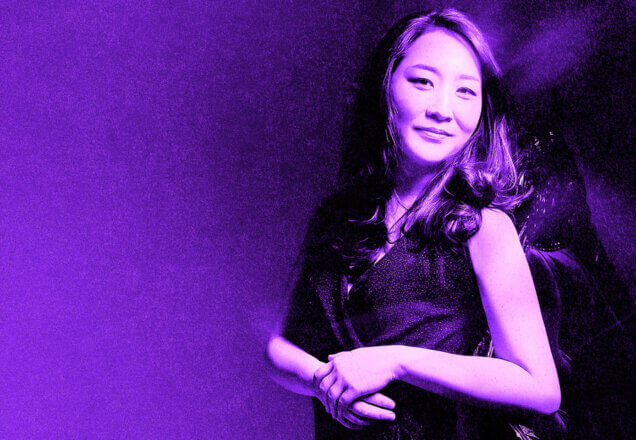
Mi-Eun Kim
Mi-Eun Kim is Director of Keyboard Studies and a Lecturer in Music at MIT, where she teaches piano through the Emerson/Harris Program for Private Study and coaches ensembles in the MIT Chamber Music Society. She also co-leads Biomechanics of Piano Playing, a research project at MIT.nano’s Immersion Lab supported by the MIT Human Insight Collaborative, exploring connections among movement science, musical expression, and piano pedagogy. Praised for her “exquisite refinement” and “vast interpretative range” by The Boston Musical Intelligencer, Mi-Eun has performed with the Boston Pops, Kansas City Symphony, Ann Arbor Symphony Orchestra, and Chelsea Symphony, and at the Gijón Piano Festival, Art of the Piano, PianoTexas, Gilmore Keyboard Festival, and Kneisel Hall. She also teaches at Brown University, serves on the faculty of Center Stage Strings, and directs the Hansong Summer Music Festival in South Korea.
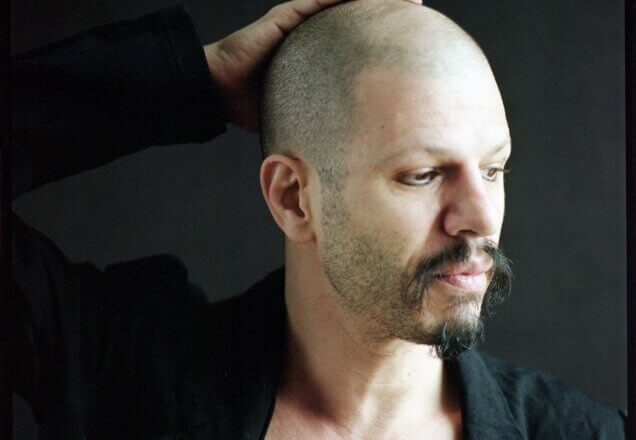
Dan Safer
Dan Safer is a Senior Lecturer and Director of Dance Programs in Theater Arts. He does shows all over, from NYC to Théâtre National de Chaillot in Paris to a giant leaky warehouse in Poland where a light fell off the grid halfway thru a show and almost killed him. Recent choreography includes “Family” by Celine Song and “Jedermann” starring Lars Eidinger (Salzburg Festival). His production of “Spider Rabbit” will be in NYC’s Under The Radar Festival this January. He teaches and performs all over the world, got kicked out of high school for a year, was a go-go dancer, and once choreographed the Queen of Thailand’s Birthday Party.
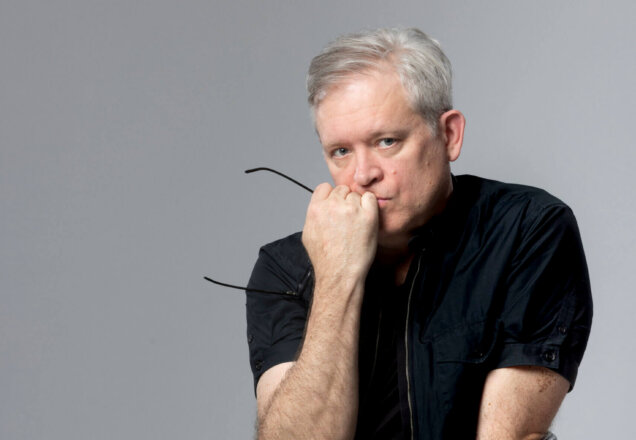
Jay Scheib
Internationally known for genre-defying works of daring physicality and the integration of new (and used) technologies in live performance, Jay Scheib’s recent productions include Richard Wagner’s “Parsifal,” for the Bayreuth Festspiele which premiered in 2023 and will have its final run in 2026. Named Best New York Theater Director by Time Out New York in 2009, and one of the 25 theater artists shaping the next 25 years of American theater, by American Theater Magazine, Scheib is a recipient of the MIT Edgerton Award, The Richard Sherwood Award, a National Endowment for the Arts/TCG fellowship, an OBIE Award for Best Direction and the prestigious Guggenheim Fellowship. He is a Professor for Music and Theater Arts at Massachusetts Institute of Technology where he teaches in the Program for Theater Arts.
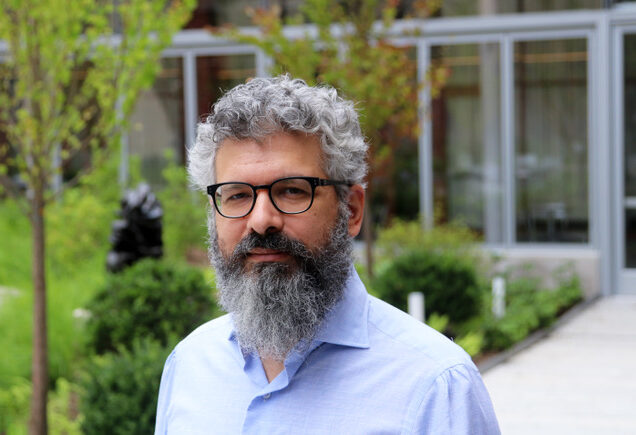
Keeril Makan
Described by The New Yorker as “empowered by modern technology but haunted by a spirit of immemorial darkness,” American composer Keeril Makan is a recipient of a Guggenheim Fellowship and the Luciano Berio Rome Prize from the American Academy in Rome. His work has been commissioned by the Bang on a Can All-Stars, American Composers Orchestra, Pacifica Quartet, and Carnegie Hall, among others. His CDs, “In Sound” (Tzadik), “Target” (Starkland), “Afterglow” (Mode), “Letting Time Circle Through Us” (New World) and “Dream Lightly” (BMOP Sound) include performances by the Kronos Quartet, Either/Or, the International Contemporary Ensemble and the Boston Modern Orchestra Project. “Persona,” his opera, commissioned by Beth Morrison Projects and National Sawdust, is an adaptation of Ingmar Bergman’s classic film, with a libretto by Jay Scheib.
About Keeril Makan’s “Madrigal“
Joyce Linde provided the gift that led to the naming of the Edward and Joyce Linde Music Building. Unfortunately, Joyce passed away before she was able to see its completion. I very much relished my relationship with Joyce. And so, when I learned of her passing, I knew that I wanted to honor her legacy by writing an original piece of music in her memory.
I wrote this piece in my studio office here in the building itself with the intention to take advantage of the unique design of this beautiful concert hall. I also found inspiration in Madrigal, the striking Sanford Biggers sculpture which greets those entering the building from the northern side of campus. For those who may not know, a madrigal is typically a choral piece from the Renaissance that features many independent, polyphonic voices. Joyce was a part of the selection committee that awarded the commission for that sculpture to Biggers so by focusing on it for this work, I was hoping to connect Joyce’s love of visual art and music in a more personal, site-sensitive way.
My piece, also titled Madrigal, in turn tries to capture the multifaceted quality of Sanford Biggers’ sculpture—that is, from whichever vantage point one might look at it, one will see the same patterns in new relationships with one another. In other words, there is no one point of view that is privileged over another—which I find inspiring. By the same token, I welcome your point of view when listening to this piece and hope it might deepen our collective memories of Joyce just the same.
—Keeril Makan
Maggie Moore
Maggie Moore is the Director of Production in Music & Theater Arts at MIT. Her previous professional roles include two decades as the Director of Theater Operations at the Institute of Contemporary Art (ICA), five seasons facilitating the American High School Theater Festival at the Edinburgh Film Festival, and acting as the Studio Manager for Ann Hamilton, both in her studio and for her onsite installations. Among Maggie’s most memorable projects are her planning of a public parade featuring Little Amal, a twelve-foot-tall puppet that animated East Boston in support of the Refugee Project; her collaboration on Ann Hamilton’s site-specific installations; and her work with acclaimed artists like Sweet Honey in the Rock, Alicia and Jason Moran, Okwui Okpokwasili and Peter Born, and Faye Driscoll.
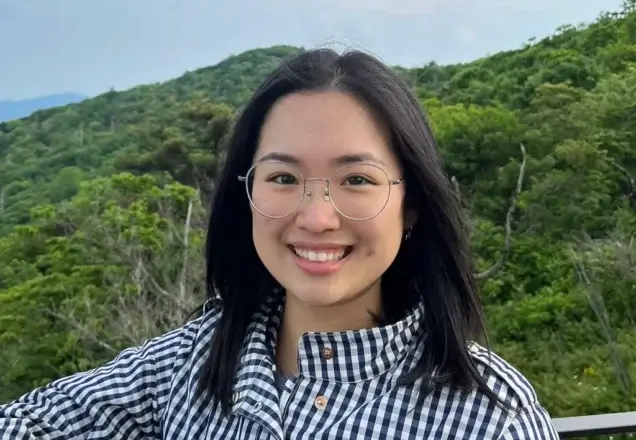
Hyo Sun Park
Soprano Hyo Sun Park is a Physics PhD student at MIT specializing in atomic physics. Introduced to classical music at an early age through piano lessons with her mother, Hyo Sun discovered her passion for singing in college, when she began vocal training with Suzanne DuPlantis. As a sophomore, she won first prize in the Bryn Mawr-Haverford Concerto Competition with Mozart’s “Exsultate, jubilate,” followed by solo appearances with the Bi-Co Chorale in works including Handel’s “Judas Maccabaeus” and Bush’s “Christmas Cantata.” At MIT, Hyo Sun has studied voice with Kendra Colton. Her recent solo performances include Mozart’s “Requiem” and “Vesperae solennes de confessore, K. 339,” with the Rhode Island Civic Chorale & Orchestra, following her win at RICCO’s 15th Annual Collegiate Vocal Competition; Poulenc’s “Gloria” with the MIT Concert Choir; and the world premiere of Charles Shadle’s “Grace” with the MIT Chamber Chorus.
Ryan Turner
Ryan Turner is Director of Vocal Ensembles at the Massachusetts Institute of Technology where he is conductor of the MIT Concert Choir and Chamber Chorus. In addition to his work at MIT, he is in his 17th season as Artistic Director of Emmanuel Music in Boston. Passionate and assiduously fluent in the music of Bach, Mr. Turner has conducted the complete cycle of 200 sacred Bach cantatas, as well as the complete masterworks of Bach: including his own reconstruction of the St. Mark Passion and performances at the Bachfest in Leipzig. A champion of new music, Ryan Turner has programmed and premiered the works of notable composers John Harbison, Errollyn Wallen, Matthew Aucoin, Evan Williams, Kati Agócs and Elena Ruehr, among others, including over 25 commissions. Guest conducting highlights include Boston Lyric Opera, the Boston Conservatory and Longy School of Music.
Amadou Lamine Touré
Amadou Lamine Touré is Director of Rambax, MIT’s Senegalese Drum Ensemble. He comes from a long line of griots, a caste of musicians and oral historians among the Wolof people. One of Senegal’s leading percussionists, Touré toured extensively with Nder et le Setsima Group, performing at Bercy (Paris), the Barbican Center (London), the Festival International de Jazz (Montréal) and Central Park Summerstage (New York). Touré is also the founder and leader of Group Saloum, a Boston-based Afropop band that fuses Senegalese mbalax with elements of jazz, funk, reggae and Afrobeat.
Human and Environmental Health
At MIT SHASS, we investigate the critical links between humanity and our environment.
How do economic policies shape public health? What drives inequality in health outcomes? How do communities adapt to environmental change?
Join us for a conversation with SHASS scholars to discuss their research that explores these urgent questions.
Thomas Levenson
Thomas Levenson’s day job has him professing science writing at MIT, where he teaches in and has on occasion directed the Graduate Program in Science Writing. He has also served as head of the Program in Writing and Humanistic Studies (as was). He has published eight books, most recently “A Pox on Fools,” and before that “So Very Small,” “Money for Nothing,” “The Hunt for Vulcan,” “Newton and the Counterfeiter,” and “Einstein in Berlin,” among others. He has produced, directed and/or written ten science documentaries, mostly for the PBS series NOVA. His film work has been honored by a shared George Foster Peabody award, by the National Academy of Science, and by the American Association for the Advancement of Science. He received a Guggenheim Fellowship in 2016 and a fellowship at Stanford’s Center for Advanced Studies in the Behavioral Sciences in 2022.
Levenson earned a BA from Harvard University.
Amy Moran-Thomas
Amy Moran-Thomas is the Andrew W. Mellon Associate Professor of Anthropology in MIT Anthropology. She is a cultural and medical anthropologist, focusing on how health technologies and ecologies are designed and come to be materially embodied—often inequitably—by people in their ordinary lives. Her research explores the material culture of chronic conditions; ethics of medicine and health technologies; dilemmas of intergenerational responsibility; and writing public anthropology. Her first book, “Traveling with Sugar: Chronicles of a Global Epidemic,” offers an anthropological account of diabetes care technologies in use and the lives they shape in global perspective. Together with colleagues in Belize and Barbados, Moran-Thomas now is co-leading a climate and health humanities project funded by an ACLS Digital Seed Grant, “Sugar Atlas: Counter-Mapping Diabetes from the Caribbean.”
Moran-Thomas earned a BA in Literature from American University and an MA and PhD in Anthropology from Princeton University.
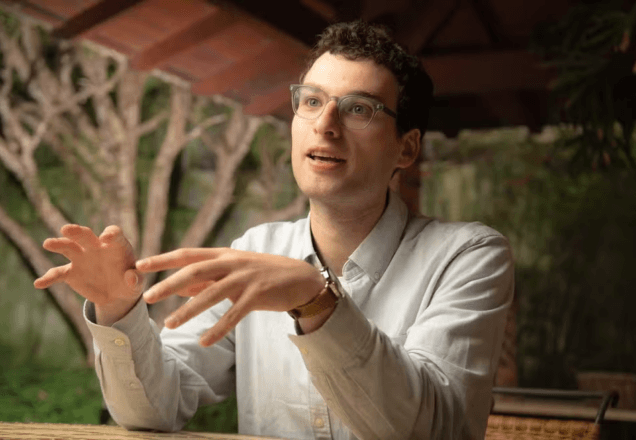
Jacob Moscona PhD '21
Jacob Moscona PhD ’21 is the 3M Career Development Assistant Professor in the Department of Economics at MIT. Jacob’s research explores broad questions in economic development, with a focus on the role of innovation, the environment, and political economy. One stream of his research investigates the forces that drive the rate and direction of technological progress, as well as how new technologies shape global productivity differences and adaptation to major threats like climate change. Another stream of his research studies the political economy of economic development, with a focus on how variation in social organization and institutions affects patterns of conflict and cooperation. Prior to joining MIT’s Department of Economics, Moscona was a Prize Fellow in Economics, History, and Politics at Harvard.
Moscona earned a BA from Harvard in 2016 and PhD from MIT in 2021.

Robin Wolfe Scheffler
Robin Wolfe Scheffler is an Associate Professor in the Program in Science, Technology, and Society. He studies the history of biology, biomedicine, and biotechnology in relationship to modern American Society, with an emphasis on merging the history of science with American history. He has pursued this effort through studies of fatigue, humor in science, and his first book, “A Contagious Cause: The American Hunt for Cancer Viruses and the Rise of Molecular Medicine.” He is currently at work on “Genetown,” the first ever history of the biotechnology industry in the Greater Boston Area. He is a co-convener of the MIT Faculty Bioeconomy Working Group.
Scheffler earned his doctorate from Yale University, an M.Phil from the University of Cambridge, and undergraduate degrees from the University of Chicago.
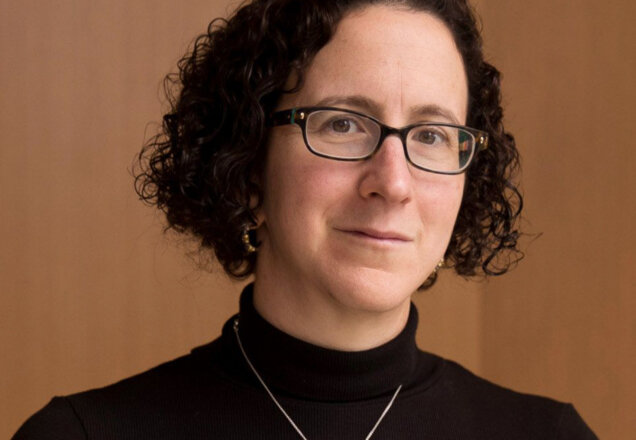
Amy Finkelstein PhD '01
Amy Finkelstein PhD ’01 is the John & Jennie S. MacDonald Professor of Economics in MIT’s Department of Economics. She specializes in public finance and health economics. She is the co-founder and co-Scientific Director of J-PAL North America, a research center at MIT that encourages and facilitates randomized evaluations of important domestic policy issues. She is also the founding Editor of American Economic Review: Insights and the co-Director of the Economics of Health Program at the National Bureau of Economic Research.
Finkelstein earned a PhD in economics from MIT, an MPhil in economics from Oxford University, and a BA in government from Harvard University.
SHASS Alumni Lightning Talks
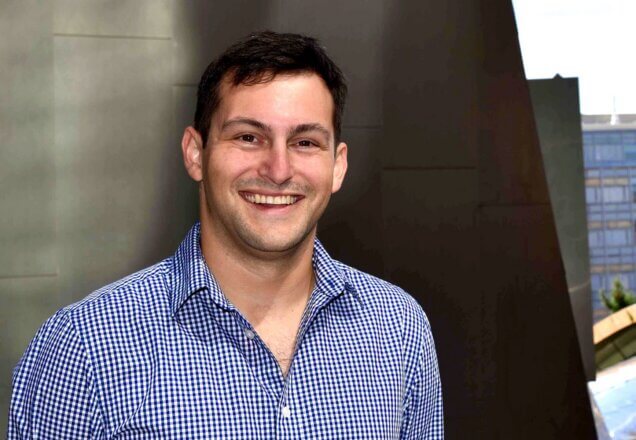
Marc Aidinoff PhD '22
Marc Aidinoff PhD ’22 is a historian of science, technology, and the state, as well as a public policymaker. Currently an assistant professor in the Department of the History of Science at Harvard University, Aidinoff researches the interplay between digital technologies and domestic policy in the United States. His forthcoming book, “Rebooting Liberalism: The Computerization of the Social Contract,” historicizes seemingly bedrock principles of U.S. governance by tracing the computerization of welfare administration.
Aidinoff earned a PhD from MIT and a bachelor’s degree from Harvard University.
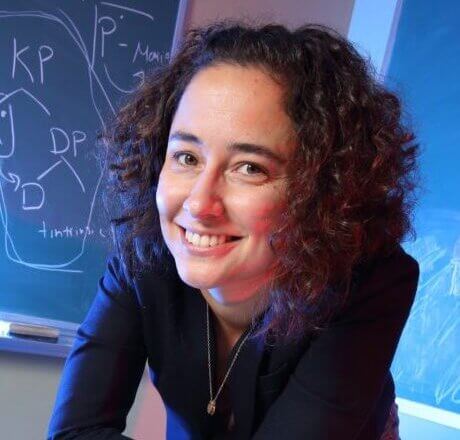
Jessica Coon PhD '10
Jessica Coon PhD ’10 is a James McGill Professor of Linguistics at McGill University. Her research is focused on variation across human languages, specifically in the domains of syntax (sentence structure) and morphology (word structure). She has published on a range of topics in these areas, including ergativity, split ergativity, case and agreement systems, hierarchy effects, extraction asymmetries, nominalization, and verb-initial word order. Much of her work has focused on Mayan languages, in particular Ch’ol (a language of southern Mexico) and Chuj (a language of Guatemala), and more recently on Kanien’kéha (Northern Iroquoian).
Coon earned a PhD in Linguistics from MIT and a BA in Linguistics from Reed College.

Eran Egozy '95 MEng ’95
Eran Egozy ’95 MEng ’95 is a Professor of the Practice in Music Technology in MIT’s Music and Theater Arts Section and the founding director of the Music Technology and Computation Graduate Program. His research interests include interactive music systems, music information retrieval, and multimodal musical expression and engagement. An entrepreneur, musician, and technologist, he co-founded Harmonix Music Systems, where he served as chief technical officer. Harmonix created the games Guitar Hero, Rock Band, and Dance Central. Egozy was named in Time Magazine’s Time 100 and Fortune Magazine’s Top 40 Under 40. An accomplished clarinetist, Egozy performs regularly with Radius Ensemble and Emmanuel Music.
Egozy earned degrees in Electrical Engineering and Music from MIT.

Jonathan Gruber '87
Jonathan Gruber ’87 is the Ford Professor of Economics in the Department of Economics. His fields of inquiry include behavioral economics, health economics, labor economics, and public economics. He is the former Director of the Health Care Program at the National Bureau of Economic Research, and the former President of the American Society of Health Economists. He is a member of the Institute of Medicine, the American Academy of Arts and Sciences, the National Academy of Social Insurance, and the Econometric Society.
Gruber earned a PhD in Economics from Harvard University and an SB in Economics from MIT.
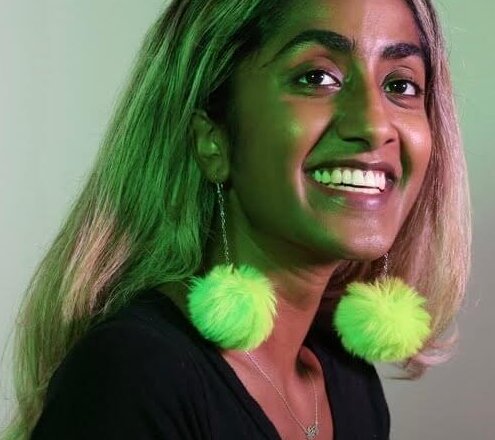
Ankita Reddy '19
Ankita Reddy completed her undergraduate studies at MIT in 2019, where she double majored in Anthropology and Biology. Her research focus is on A.I. and its impact on health care infrastructure. “I’m interested in how, in these high-stakes environments, experts and health systems develop workflows and ethical frameworks for A.I. and data-driven care,” she says. She’s pursuing doctoral study at the University of Pennsylvania.
Why did you choose to study your field/ fields at MIT?
I came to MIT with a background and interest in science documentary filmmaking. After much course exploring, I became involved in science, technology, and society (STS) and medical anthropology classes and communities at MIT. While my biology classes allowed me to understand the mechanisms of disease, my social science classes gave me the tools to interrogate why disease unevenly affects communities, and how people make sense of their bodies and healthcare in the face of technological innovations and systematic constraints. I also really resonated with the idea of working “in the field” with community members to better understand their perspectives and worlds. My two majors allowed me to combine biological and qualitative research with mixed-media work, so I was able to hone in on my creative practice as well!
What are you doing now?
I am an MD/PhD trainee at the University of Pennsylvania, and I am pursuing my PhD in Medical Anthropology.
What is the focus of your research or work?
My anthropological research focuses on the opportunities and uncertainties introduced by health A.I. infrastructures, and how healthcare workers, technologists, and patients manage these uncertainties in the pursuit of good healthcare. In particular, I am studying how hospitals are integrating emerging A.I. tools for meaningful clinical use. I am interested in how, in these high-stakes environments, experts and health systems develop workflows and ethical frameworks for A.I. and data-driven care. I am also involved in efforts to educate patients and community members about A.I. healthcare, and to incorporate their perspectives into ethical technological integrations.
How did your experience in SHASS help prepare you for what you want to do in the world?
My classes, discussions, and connections fostered through SHASS taught me the value of deep listening, priming me to ask difficult questions about technological solutions (and to have the courage to do so). These critical listening and thinking skills have made me a better collaborator as I work with scientists, patients, doctors, and engineers. In the future, I’d like to combine my clinical practice with sociotechnical research of A.I. technologies, as well as science communication work to educate lay audiences through documentary and other forms of storytelling. I think all these roles require me to stay curious about different people’s perspectives, and appreciate how this complexity can lead to more informed and equitable technological solutions.
Was there a particular class you took or connection you made in SHASS that had a memorable impact?
There are 2 classes that I really enjoyed and still draw from in my current work. The first was a class called 21A.331J/7.331K/HST.431J (Infections and Inequalities: Interdisciplinary Perspectives on Global Health) co-taught by Erica James (an anthropologist), Dennis Kim (an infectious disease physician), and Arup Chakraborty (a computational biological engineer). It was so fascinating to learn about the complex biological and social dimensions of diseases through a multidisciplinary framework and to observe firsthand the collaboration between different field experts.
The second class was Documentary Video (DV) Lab taught by Chris Boebel and Chris Walley. I not only learned about the development and theory behind documentary-making, but I had the chance to shoot my own short film about colorism within diaspora communities. I loved collaborating with the fellow students in the class as we explored our research questions through film work, which I continue to pursue today.
Perception, Cognition, and Expression
How do we make meaning? How do we understand beauty? How does art shape what we think and feel?
In this discussion, MIT SHASS scholars will examine the profound ways we interpret the world and express ourselves.
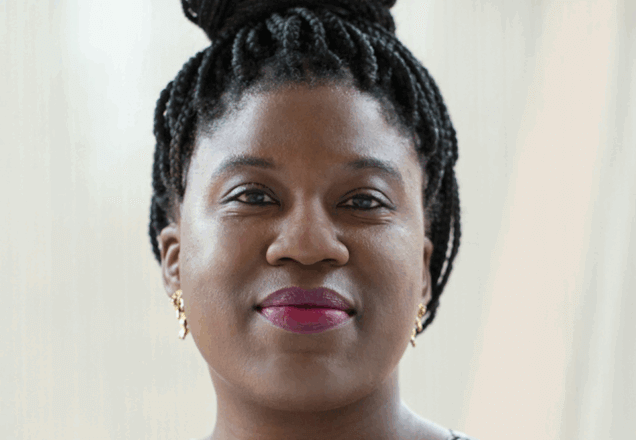
Sandy Alexandre
Associate Professor Sandy Alexandre’s research spans the late nineteenth-century to present-day black American literature and culture. Her work takes into serious account the ways in which an ecology comprised of people, places, and things can, at once, reverberate and attempt to negotiate the various instances of racial violence that mark the aggregate of U.S. history.
Alexandre earned a PhD in English Language and Literature from the University of Virginia and a BA in English from Dartmouth College.

Justin Khoo
Justin Khoo is a professor in the Department of Linguistics and Philosophy. He works on topics in philosophy of language, metaphysics, and aesthetics and hosts a podcast on philosophy and film called Cows in the Field.
Khoo earned a PhD in Philosophy from Yale University and a BA in Philosophy from the University of California, Davis.
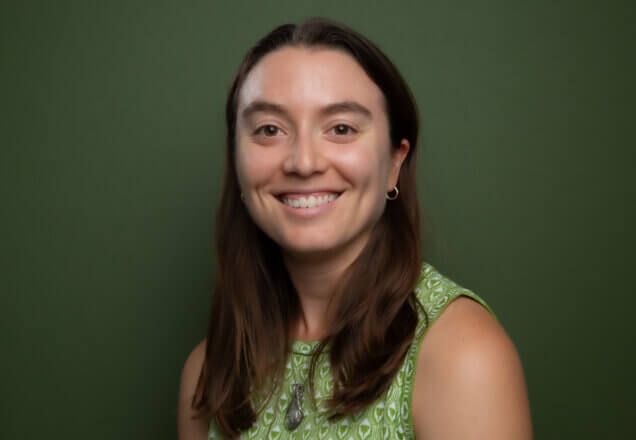
Elise Newman '16 PhD '21
Elise Newman ’16 PhD ’21 is an assistant professor in the Department of Linguistics and Philosophy. She has written on topics in syntax, semantics, and first language acquisition. Her current work studies the relationship between words and sentence structure: how the requirements of individual words get reflected in grammatical rules, and how principles of grammar likewise constrain the possible properties individual words can have. Prior to joining MIT’s faculty, she spent two years as a post-doctoral researcher at the University of Edinburgh.
Newman earned a PhD in Linguistics and SBs in Linguistics and Physics from MIT.
Jay Scheib
Internationally known for genre-defying works of daring physicality and the integration of new (and used) technologies in live performance, Jay Scheib’s recent productions include Richard Wagner’s “Parsifal,” for the Bayreuth Festspiele which premiered in 2023 and will have its final run in 2026. Named Best New York Theater Director by Time Out New York in 2009, and one of the 25 theater artists shaping the next 25 years of American theater, by American Theater Magazine, Scheib is a recipient of the MIT Edgerton Award, The Richard Sherwood Award, a National Endowment for the Arts/TCG fellowship, an OBIE Award for Best Direction and the prestigious Guggenheim Fellowship. He is a Professor for Music and Theater Arts at Massachusetts Institute of Technology where he teaches in the Program for Theater Arts.
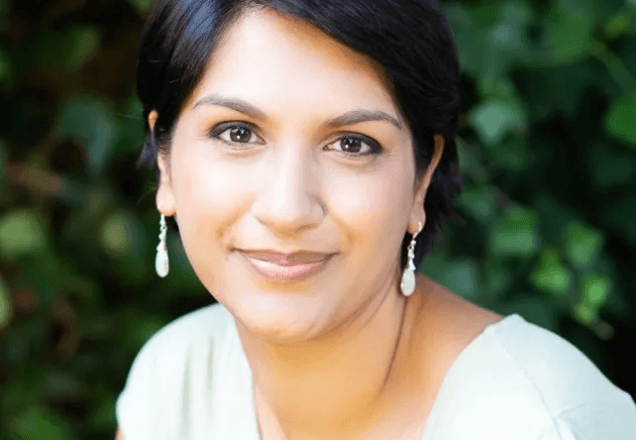
Angela Saini
Angela Saini is a journalist and assistant professor of science writing at MIT. She is the author of four books, which have been translated into 18 languages. Her bestselling 2019 book “Superior: The Return of Race Science” was a finalist for the LA Times Book Prize, and her latest, “The Patriarchs: How Men Came to Rule,” was a finalist for the Orwell Prize for Political Writing. Her next, out in January 2027, investigates the limitations and risks of human classification.
Angela holds a master’s degree in engineering from the University of Oxford and a master’s in science and security from the Department of War Studies at King’s College, London. She was elected an honorary fellow of her alma mater, Keble College, in 2023.