Ankita Reddy ’19
Anthropology (Course 21A)
Biology (Course 7)
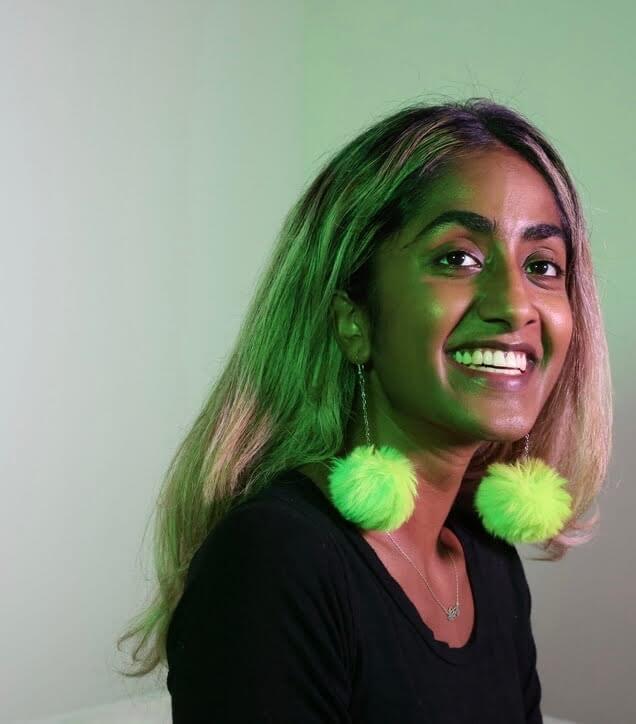
Ankita Reddy completed her undergraduate studies at MIT in 2019, where she double majored in Anthropology and Biology. Her research focus is on A.I. and its impact on health care infrastructure. “I’m interested in how, in these high-stakes environments, experts and health systems develop workflows and ethical frameworks for A.I. and data-driven care,” she says. She’s pursuing doctoral study at the University of Pennsylvania.
Why did you choose to study your field/ fields at MIT?
I came to MIT with a background and interest in science documentary filmmaking. After much course exploring, I became involved in science, technology, and society (STS) and medical anthropology classes and communities at MIT. While my biology classes allowed me to understand the mechanisms of disease, my social science classes gave me the tools to interrogate why disease unevenly affects communities, and how people make sense of their bodies and healthcare in the face of technological innovations and systematic constraints. I also really resonated with the idea of working “in the field” with community members to better understand their perspectives and worlds. My two majors allowed me to combine biological and qualitative research with mixed-media work, so I was able to hone in on my creative practice as well!
What are you doing now?
I am an MD/PhD trainee at the University of Pennsylvania, and I am pursuing my PhD in Medical Anthropology.
What is the focus of your research or work?
My anthropological research focuses on the opportunities and uncertainties introduced by health A.I. infrastructures, and how healthcare workers, technologists, and patients manage these uncertainties in the pursuit of good healthcare. In particular, I am studying how hospitals are integrating emerging A.I. tools for meaningful clinical use. I am interested in how, in these high-stakes environments, experts and health systems develop workflows and ethical frameworks for A.I. and data-driven care. I am also involved in efforts to educate patients and community members about A.I. healthcare, and to incorporate their perspectives into ethical technological integrations.
How did your experience in SHASS help prepare you for what you want to do in the world?
My classes, discussions, and connections fostered through SHASS taught me the value of deep listening, priming me to ask difficult questions about technological solutions (and to have the courage to do so). These critical listening and thinking skills have made me a better collaborator as I work with scientists, patients, doctors, and engineers. In the future, I’d like to combine my clinical practice with sociotechnical research of A.I. technologies, as well as science communication work to educate lay audiences through documentary and other forms of storytelling. I think all these roles require me to stay curious about different people’s perspectives, and appreciate how this complexity can lead to more informed and equitable technological solutions.
Was there a particular class you took or connection you made in SHASS that had a memorable impact?
There are 2 classes that I really enjoyed and still draw from in my current work. The first was a class called 21A.331J/7.331K/HST.431J (Infections and Inequalities: Interdisciplinary Perspectives on Global Health) co-taught by Erica James (an anthropologist), Dennis Kim (an infectious disease physician), and Arup Chakraborty (a computational biological engineer). It was so fascinating to learn about the complex biological and social dimensions of diseases through a multidisciplinary framework and to observe firsthand the collaboration between different field experts.
The second class was Documentary Video (DV) Lab taught by Chris Boebel and Chris Walley. I not only learned about the development and theory behind documentary-making, but I had the chance to shoot my own short film about colorism within diaspora communities. I loved collaborating with the fellow students in the class as we explored our research questions through film work, which I continue to pursue today.