Cara Lai ’16
Mechanical Engineering (Course 2A)
Literature (Course 21L)
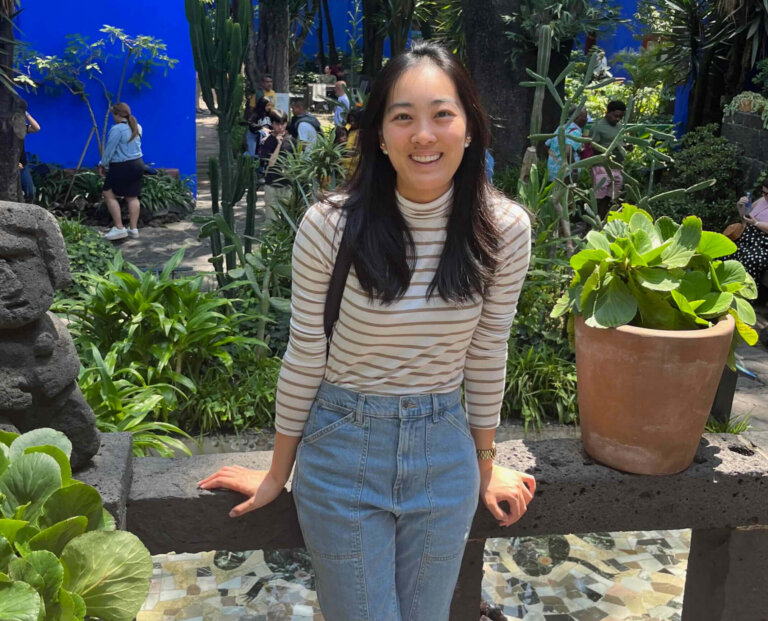
Cara Lai, who graduated from MIT in 2016 with degrees in Mechanical Engineering and Literature, is a medical resident in orthopedic surgery. “Literature, and the humanities more broadly, helped me step into other people’s shoes and understand the breadth of life experiences represented in our patients,” she says. Her research focuses on the body’s upper extremities. In August, she’ll begin a fellowship in shoulder and elbow surgery at the Hospital for Special Surgery in New York.
Why did you choose to study your field/ fields at MIT?
I double majored in Courses 2A (Mechanical Engineering) and 21L (Literature) at MIT because I loved my humanities classes and felt like they complemented my technical courses really well. MIT has always had a tradition of interdisciplinary learning and I felt that the questions we tackled in the Literature Section helped me think about the real-world applications of my engineering and product design courses. It was also a helpful mental break to be able to switch between the two disciplines and challenge my brain in different ways.
What are you doing now?
I went to medical school at Stanford after graduating, and after medical school I started residency in orthopedic surgery at Mayo Clinic. I am currently in my last year of residency and will move to New York this August to start my fellowship in shoulder and elbow surgery at the Hospital for Special Surgery.
What is the focus of your research or work?
I decided to focus on shoulder surgery because I find the anatomy of the upper extremity fascinating and because there are still significant advancements that are being made in the field. It’s an exciting time to be a shoulder and elbow surgeon. Outside of the OR, I continue to be interested in biomechanics research, which I first was exposed to at MIT. We recently completed a project at Mayo investigating ways to repair the deltoid muscle after iatrogenic injury in shoulder surgery, using a materials testing system to measure which suture construct provides the most robust repair in a muscle tear.
How did your experience in SHASS help prepare you for what you want to do in the world?
Medicine is both an art and a science, which is part of what drew me to the field in the first place. There is the technical mastery of what we accomplish in the operating room—something that takes a lifetime—but there is also an often under-appreciated component of being a surgeon, which is the way we communicate with our patients and help them make decisions to maximize their quality of life. Being able to do both is what makes surgery so rewarding.
Literature, and the humanities more broadly, helped me step into other people’s shoes and understand the breadth of life experiences represented in our patients. I hope that is reflected in the way that I practice.
Was there a particular class you took or connection you made in SHASS that had a memorable impact?
Through the generous support of the Kelly Douglas Travel Fellowship, I obtained funding to travel to Madrid during IAP of my senior year and take a class in Spanish Literature with Margery Resnick. It was an incredible month. I will never forget living in the heart of the city with my host family, waking up every day and taking the metro to class, and wandering around the city in the evenings. I will always be grateful to MIT for giving me that opportunity!