A Renaissance woman for the modern age
In “Hagiography in Marguerite de Navarre’s Heptaméron,” lecturer Leanna Bridge Rezvani paints a fascinating portrait of an iconoclastic writer, advocate, scholar, and reformer.
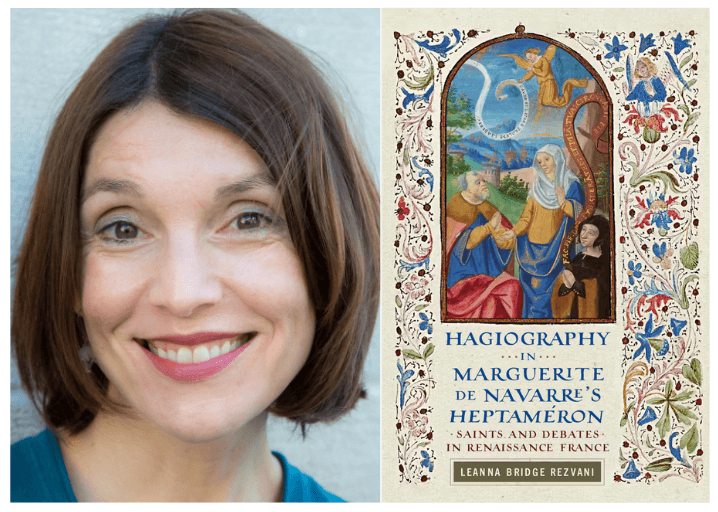
Leanna Bridge Rezvani, a lecturer in French with MIT Global Languages, is a scholar who investigates language and culture, religion and literature, and the use of technology in language pedagogy. Her new book, “Hagiography in Marguerite de Navarre’s Heptaméron: Saints and Debates in Renaissance France,” explores the writings of Marguerite de Navarre, an important figure during a vibrant historical period in which the arts, politics, culture, and society were in conversation and contention with one another.
“As a woman in 16th-century France, Marguerite was remarkable for what she was able to accomplish in various contexts,” Rezvani says. In this Q&A, Rezvani describes de Navarre’s unique place in history as an educated, powerful woman and patron of the arts, her work on behalf of women, the interdisciplinary nature of the work, and more.
What’s the book about?
Marguerite de Navarre was one of the most educated and powerful women of Renaissance Europe. Along with her active engagement in politics and religion, she was a patron of the arts and a prolific writer. My book explores the influence of saints’ lives on the Heptaméron, her celebrated collection of short stories. Through an analysis of Marguerite’s tales together with literary works, theological writings, and visual images of the saints, I illustrate how she both drew on and revised hagiography to increase her authority as a writer and advocate for women.
Why did you decide to write this book?
As a woman in 16th-century France, Marguerite was remarkable for what she was able to accomplish in various contexts. She practiced her faith in the Catholic Church, but she also lobbied for reform and protected people of different faith traditions who were persecuted for their unorthodox ideas. Scholars have written extensively on the complexities of her religious thought, but the substantial influence of hagiography on her writings had been underexplored. Today we think of the saints as holy individuals, but we often forget that female saints were rebellious; they defied societal and familial expectations, rejected forced marriages, and demonstrated unwavering strength and faith in the face of brutality. At a time when women were precluded from writing about theology, Marguerite integrated the iconography of these saints into her “fiction” to call for change in the Church hierarchy, denounce misogyny, and bring greater attention to violence against women.
Why should people read the book?
The Heptaméron is a compelling text in that it is a collection of seventy-two short stories, but it also includes an elaborate frame narrative where ten storytellers interpret and debate the content of the tales. The diverse voices integrated into Marguerite’s text provide a unique window into a wide range of perspectives in sociohistorical debates. While my book is about medieval and sixteenth-century French literature, it is highly interdisciplinary and holds appeal for specialists from a variety of disciplines since it also explores theology, history, women’s studies, and visual culture. Finally, I had the opportunity to work with several one-of-a kind manuscripts from early modern France and the images from these rarely seen devotional texts that are included in my book are stunning.
Marguerite de Navarre is a historical figure who lived in Europe during the Renaissance. What lessons or ideas does she have for people today?
Marguerite’s tales of sexual assault, clerical abuse, and domestic violence exemplify her extraordinary courage as a woman writer, but they also demonstrate the timeless value of her work. Today’s readers of the Heptaméron cannot fail to notice the continued relevance of the very challenges that women confront in the text. Consistently high rates of femicide, rape, and sexual abuse across the globe today illustrate the sobering reality of violence toward women that remains shockingly pervasive in society. Just as Marguerite’s tales highlight the power of women’s informal social networks in 16th-century France, movements like #Metoo or #NousToutes and the response of sexual assault survivors to Gisèle Pelicot’s brave decision to waive anonymity in her high-profile 2024 rape case illustrate the ongoing importance of women publicly sharing their stories.
What do you hope readers take away from the book?
Of course, I want to bring greater attention to the richness and complexities of the Heptaméron and highlight the work’s important role in debates about women and religion. I also hope that my analysis of Marguerite’s innovative response to injustices in Renaissance France will encourage readers to work for positive social change when confronting similar issues in our society today.

Share a Story
Do you have a story to share about an event, a publication, or someone in the community who deserves a spotlight? Reach out to the SHASS Communications Team with your idea.
Email SHASS Communications