Building bridges through experiences
Living Climate Futures Symposium brings together humanities, sciences, and institutions to strengthen both social justice movements and research.
Climate change is global, but its effects are hyperlocal. A typically verdant farmland browns. A city’s streets flood. A village’s well runs dry.
Individuals around the world experience climate change in ways as unique as the communities they live in. And while mitigation and adaptation strategies require input from the sciences, no one knows a place like the people who live there.
As Chris Walley, SHASS Dean’s Distinguished Professor of Anthropology and Program Head explains, “Climate change is a social, political, economic, and cultural problem, as well as a technological and scientific one. It’s impossible to address climate change without thinking and working in a similarly holistic fashion. None of us can afford to stay limited to narrow disciplinary fields.”
It’s why a consortium of MIT faculty and researchers have come together under the framework of the Living Climate Futures (LCF) research group, which focuses on three main areas: understanding how climate change and solutions affect people day-to-day, supporting academic-community partnerships, and buildings bridges between STEM and the humanities. MIT Human Insight Collaborative (MITHIC) recognized the importance of this effort by awarding their inaugural Faculty-Driven Initiatives award to LCF in 2025.
“Living Climate Futures does such a great job of thinking holistically about the challenge that’s often shorthanded as ‘climate change’ or ‘a warming climate,’ but really encompasses shifts in our infrastructures, in our energy industries, in our job prospects and opportunities,” said Heather Paxson, William R. Kenan, Jr. Professor of Anthropology and faculty co-lead of MITHIC. “What often gets framed as problems that require a technological solution are always at the end of the day about people.”
The LCF initiative recently hosted a three-day symposium, from April 23 to 25, bringing voices together from across the globe to inform academic research with lived experiences.
“This…challenges us to think more carefully about knowledge itself. How do we know? What do we consider to be evidence and whose knowledge counts?” said Walley in her opening remarks at the symposium. “Our intention is not to move away from intellectual rigor, but the opposite. We recognize that bringing multiple forms of knowledge-making to bear on the problems we face can make that knowledge stronger and more sound.”
Fighting for environmental justice
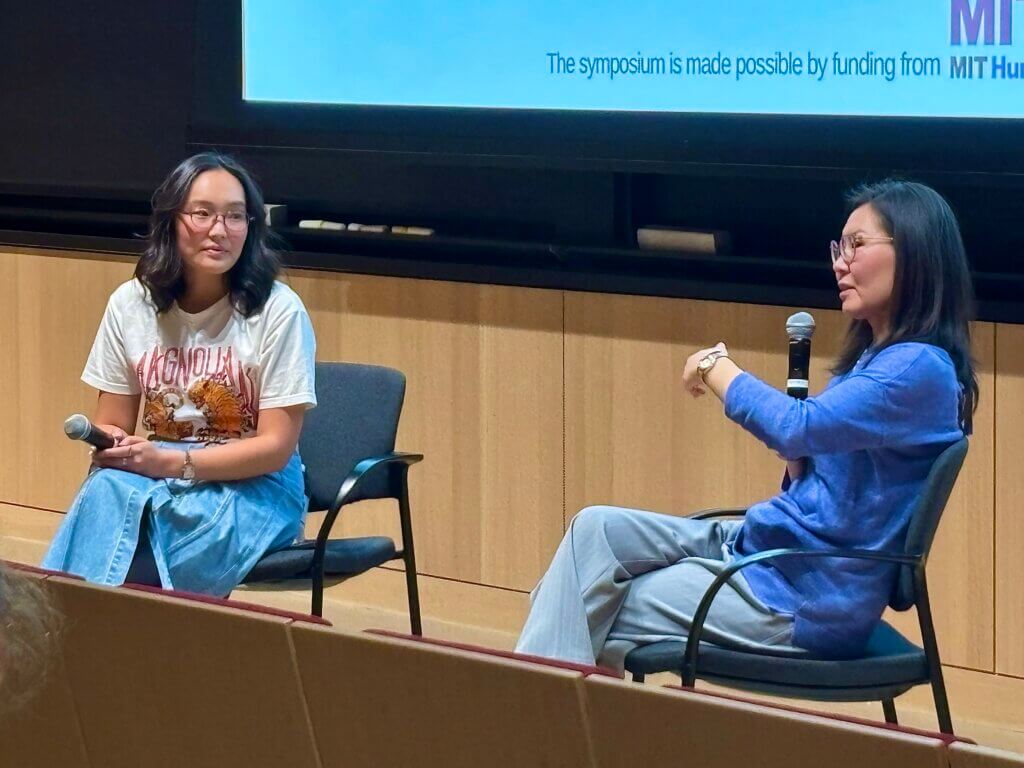
The symposium kicked off with a workshop on writing effective op-eds and a screening of a film, “If I Could Only Hibernate,” about environmental challenges facing youth in Mongolia.
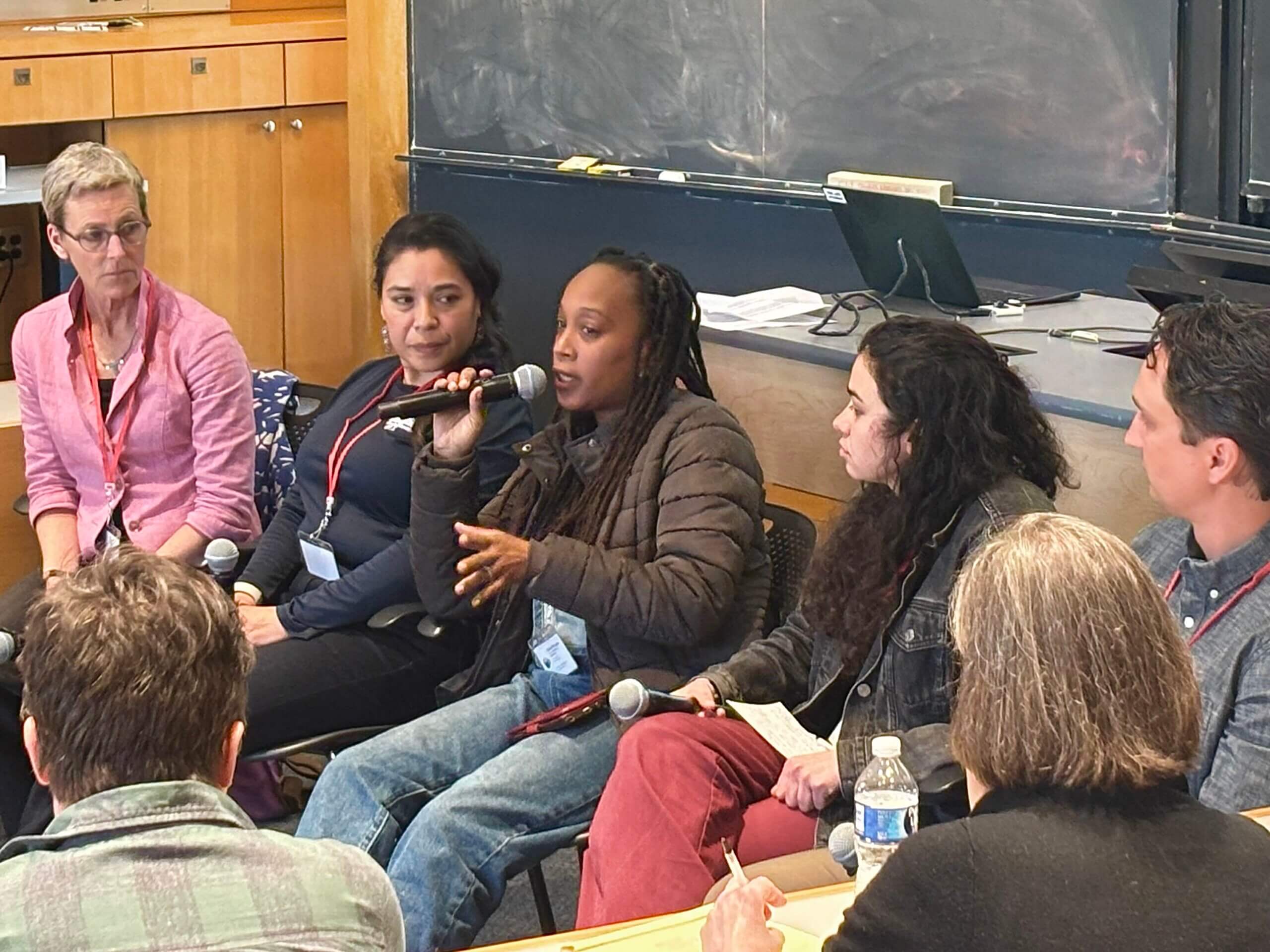
The following morning saw the return of speakers from the initial 2022 LCF symposium discussing hurdles their activism has faced in the intervening four years, including increasingly challenging local circumstances. Despite the frustrating state of many of their projects, a note of hope threaded through their comments.
“In the cruelty of our time, somehow we all find each other,” said Kurt Russo, Co-Executive Director of the Indigenous activism group Se’Si’Le.
Another session outlined data centers and other large tech development projects as the next big environmental issue. Academics and activists gave insights into the impact these projects have on resource availability in areas historically burdened with pollution from power plants and coal mining.
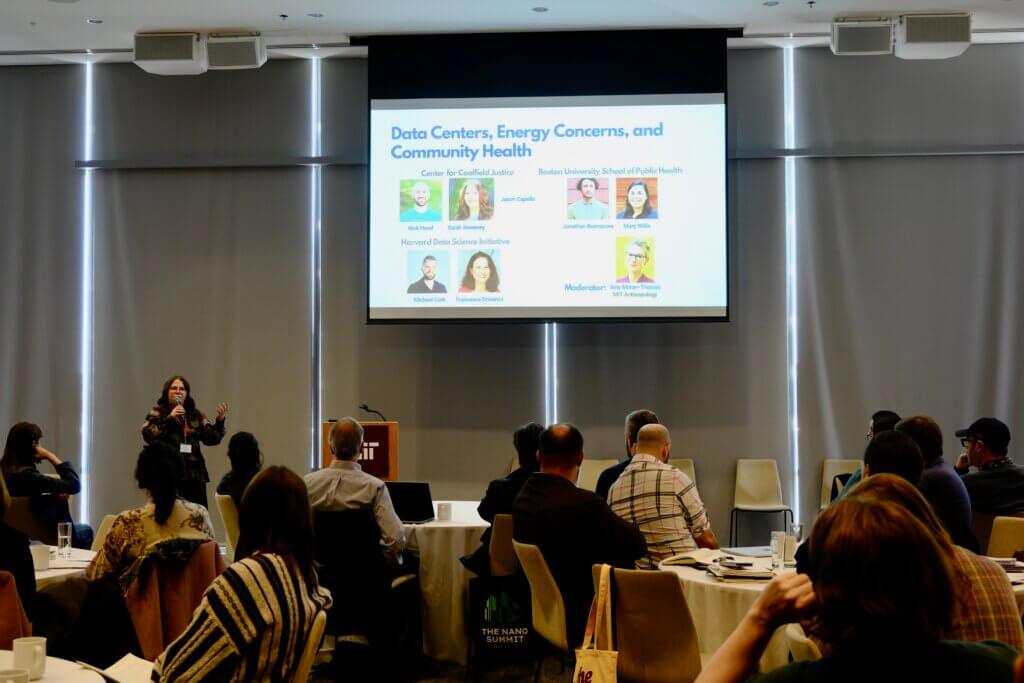
“The digital world has a very real physical footprint, and that physical footprint is through data centers,” said Michael Cork, Postdoctoral Research Fellow in Biostatistics at Harvard T.H. Chan School of Public Health and Founder & Principal Analyst at EmPower Analytics Group during the panel. He went on to highlight one hyperscale data center going up in Indiana that requires 2.2 gigawatts of electrical capacity, more than what is required to power the whole of Seattle. “The question is, how do we get that power? … We’re seeing an increased trend of developers running out of grid space and turning to bringing onsite fossil fuel gas turbines.”
Onsite natural gas plants would add power-generation pollution on top of the ongoing environmental degradation.
“You’re looking at communities that have been extracted from and taken advantage of for many years,” said Jason Capello, Community Advocate at the Center for Coalfield Justice (CCJ) in Pennsylvania. “Data centers are the next wave, but it’s been this conversation, this fight for information and partnership has been deeply ingrained in our communities and in CCJ for a really long time.”
Capello said that partnerships with MIT researchers have helped people in the community feel heard while informing some of MIT’s studies into the issue, but that communities’ needs are still largely ignored by the large companies building at these sites.
A few speakers noted that people with disparate political viewpoints unite in resistance to these types of projects, which can ease open doors to more fraught conversations.
“It is the most purple issue I’ve ever worked on,” said Sarah Sweeney, Community Organizer for the Center for Coalfield Justice. “Where we organize is a very politically conservative area, but they hate this too. So, I absolutely think there’s a big opportunity there.”
After the panel, attendees who stayed for lunch got a chance to practice the process of dealmaking between communities and data center builders through a game presented by Sara Wylie, PhD ’11, Associate Professor of Sociology and Health Science at Northeastern University. Players had a limited number of tokens that represented bargaining power. They spent these tokens to secure community benefit programs from data center managers – say, the promise of hiring locally or providing on-site childcare. The game, initially developed for the Department of Energy, showed how complicated it is to bargain for the needs of all stakeholders of a community.
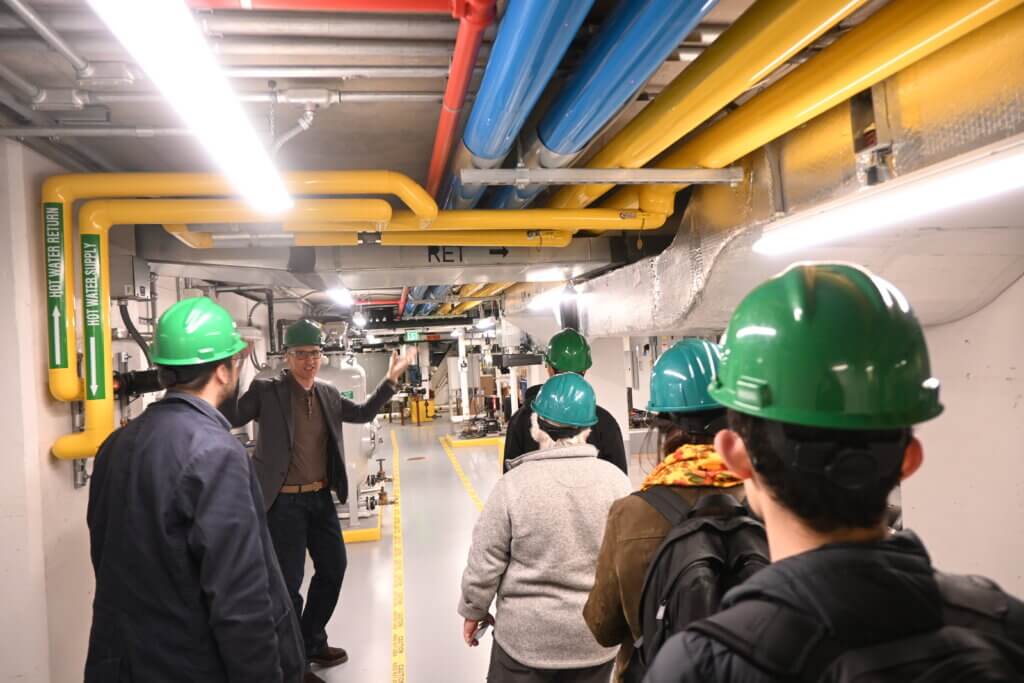
Other symposium sessions covered more place-specific areas of potential partnership, including urban farms, Mongolian grasslands, and Navajo (Diné) lands in Southwestern US. The theme of place-based collaboration continued with field trips to the Stone Living Lab in Boston Harbor, the Food Project in Roxbury, and to labs and facilities at MIT dedicated to sustainability.
“I loved the fact that they had this way for you to connect with the community you’re in,” said Farah Qureshi, Assistant Professor of Anthropology at Colby who has been spending her sabbatical in the Anthropology department at MIT. “Especially for an environmental and climate-based conference, it was really great to see that there were so many different options where you could directly interact and understand and process stuff that you had seen and heard in the talks.”
Learning and doing across disciplines
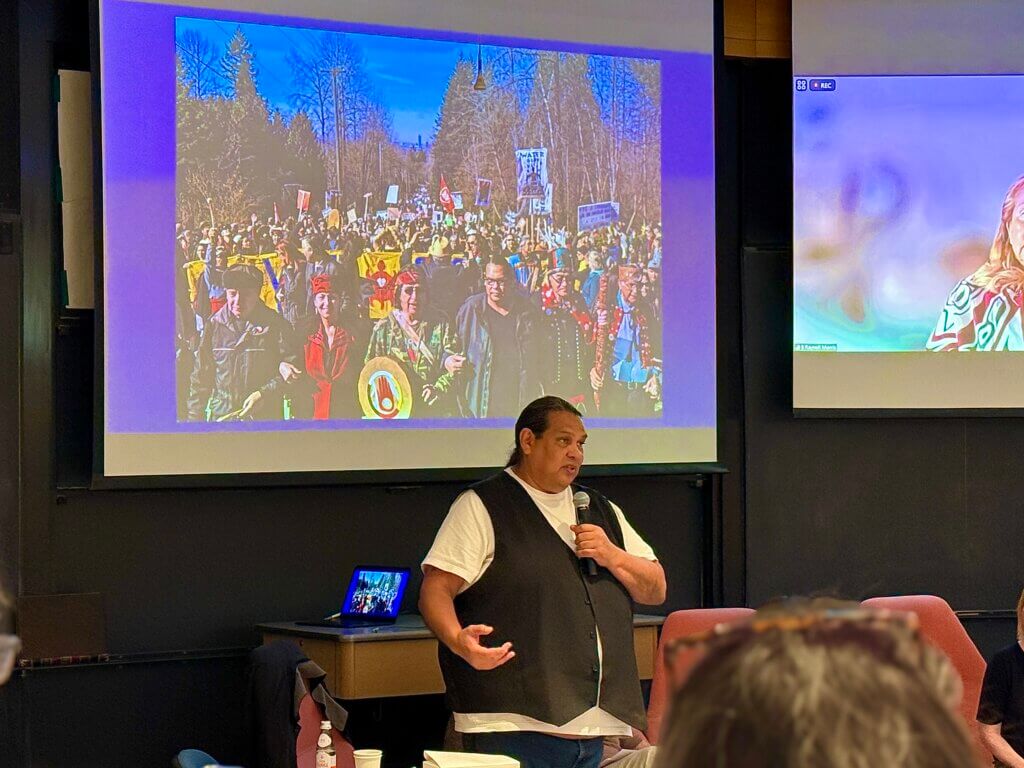
Back on campus on day three of the symposium, Indigenous-led environmental groups from the Pacific Northwest led a session on the role of spirituality during this time of human-led climate disruption.
In one of the final sessions, MIT students talked about LCF’s experiential learning courses developed in conjunction with various departments, including anthropology, STS (Science, Technology and Society), urban planning, nuclear engineering, and materials science. The classes all give students a sense of how powerful it can be to engage communities in research.
“It’s like MIT, mens et manus. The idea is to really get people going off campus and meeting with groups in different places around particular problems,” said Walley.
Jaime Castillo, a first year who took “Anthro-Engineering: Infrastructures of Climate Action in the Pacific Northwest,” appreciates that MIT offers classes that look beyond the typical technical solutions to climate-related problems.
“The Anthropology department in general has a really nice perspective that we don’t see a lot that considers climate change as the broader societal issue it is, and not just the question of the numbers of carbon emissions,” said Castillo.
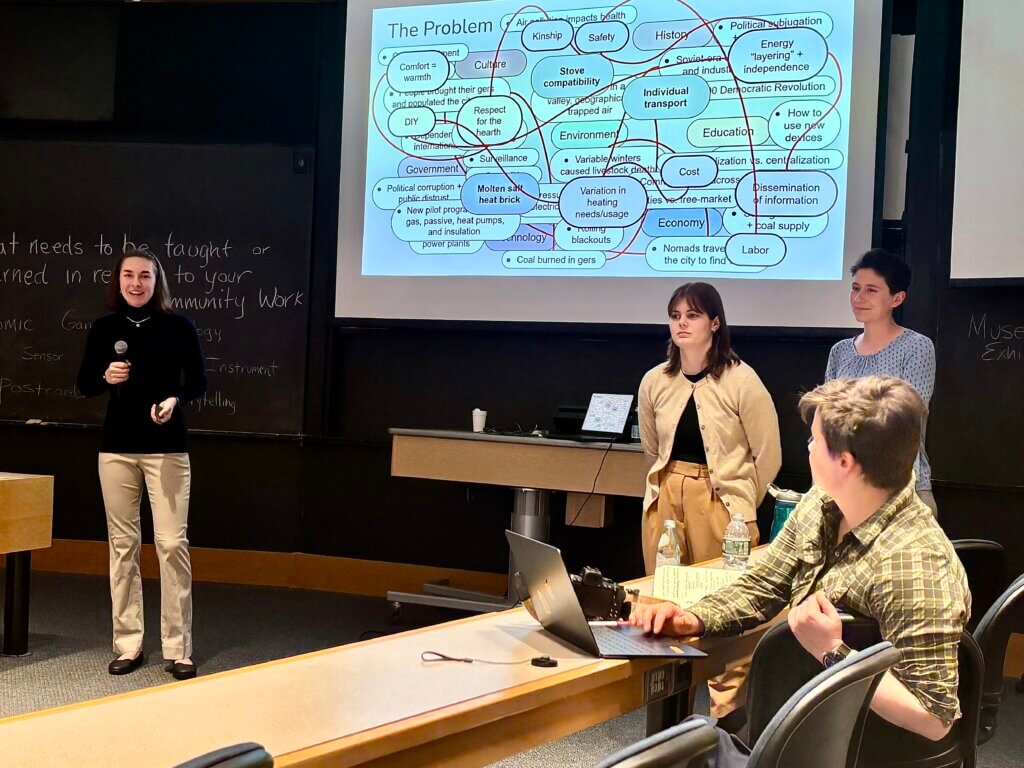
Aaron De Leon, a junior nuclear engineering major, enrolled in “Anthro-Engineering: Green Steel, Green Jobs” because of his interest in human-centered engineering.
“This experiential learning initiative at MIT is really trying to have in-person connections with the actual topics that we’re studying to connect engineers more to the social problems that are occurring around the world,” he said.
The 2026 LCF symposium came to a close with a screening of the documentary “Climate Voices” by Leslie Jonas, which tells stories of the climate fight from Native perspectives.
Building trust to build bridges
While humanity is more connected than at any point in history, it is also easier to become entrenched in beliefs and politics. These intractable conflicts lead to a breakdown in communication, highlighting differences and blinding each side to similarities that could be leveraged toward solutions.
A guiding light for the people of LCF is something first said by Lumbee nation elder Donna Chavis at the inaugural LCF symposium in 2022 – “change happens at the speed of trust.” Trust is key to building bridges between disciplines, communities and individuals dealing with the fate of their homes and livelihoods. LCF is an active force in cultivating that trust by helping communities and researchers find common ground.
“We all have the same problem, but we’re not using words that we mutually agree upon,” said De Leon. “We have science and engineering buzzwords like climate change and then the human centered perspective of, ‘my crops aren’t growing right.’ I think that is a much more effective way of communicating to people rather than this politicized divide of climate change.”
Related


Share a Story
Do you have a story to share about an event, a publication, or someone in the community who deserves a spotlight? Reach out to the SHASS Communications Team with your idea.
Email SHASS Communications